Hunt Oribi Like a Pro: Complete Hunting Guide
Introduction
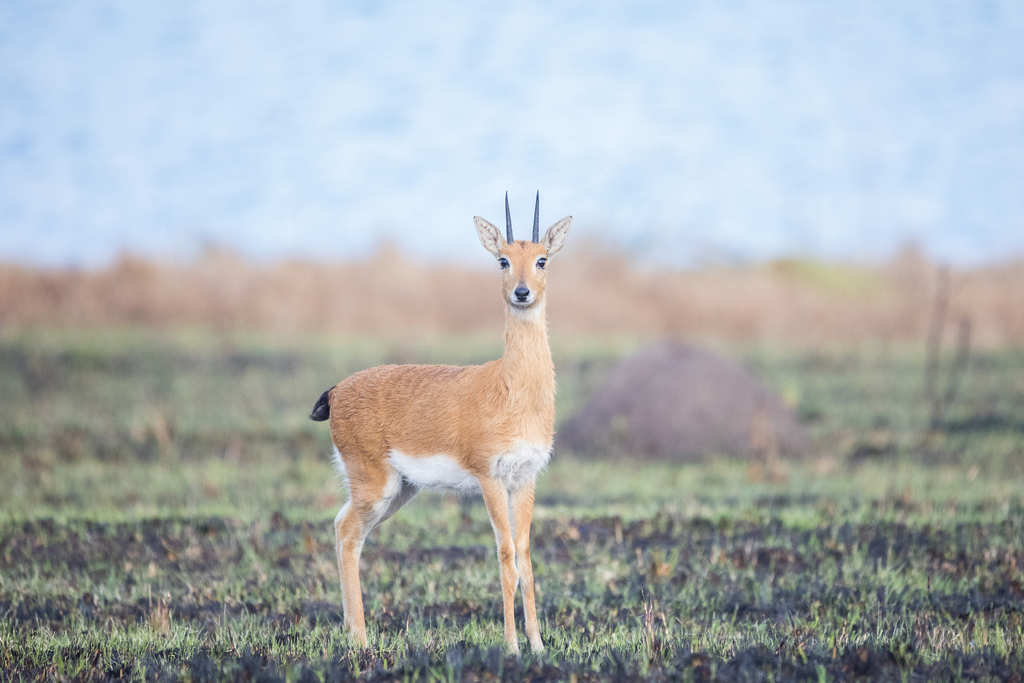
The sun was just kissing the horizon, painting the vast African savanna in hues of orange and gold. A gentle breeze rustled through the tall grass, carrying the scent of wild sage and damp earth. I was low, crawling on my belly, heart thumping a silent rhythm against the dry ground. Ahead, barely visible above the swaying blades, was a small, elegant form – an Oribi ram. Its large, dark eyes, ever vigilant, scanned the horizon. A twitch of an ear, a flick of its slender tail, and then, as if sensing the slightest disturbance in the air, it froze, a picture of delicate alertness. This is the magic of an Oribi hunt: a test of patience, stealth, and acute observation, culminating in a moment of pure, unadulterated wilderness thrill.
Hunting Oribi isn't about brute force; it's about finesse. These small, graceful antelopes are masters of camouflage and evasive maneuvers, making them a true trophy for any hunter seeking a challenge beyond the ordinary. Found across the grasslands of sub-Saharan Africa, Oribi offer an authentic taste of African plains hunting, demanding respect for their keen senses and swift escape. It's an experience that will hone your stalking skills and leave you with an immense appreciation for the continent's diverse wildlife.
When to Go (Best Seasons and Times)
Oribi can be hunted year-round in many African countries, but specific seasons offer distinct advantages. The dry season (typically May to October) is often preferred. During this period, the grass is shorter, improving visibility and making spotting Oribi easier. Water sources are also more concentrated, which can lead to more predictable animal movement patterns. However, the dry season can also mean hotter temperatures and dustier conditions.
Conversely, the wet season (November to April) sees the savanna transform into a lush, green landscape. While the thicker vegetation can make spotting Oribi more challenging, it also provides excellent cover for stalking. The cooler temperatures and vibrant scenery add another dimension to the hunt.
Regardless of the season, the best times of day to pursue Oribi are early mornings, just after sunrise, and late afternoons, leading up to sunset. Oribi are most active during these cooler periods, grazing and moving between feeding and bedding areas. Midday hunts are generally less productive as Oribi tend to seek cover from the heat. Always pay close attention to local weather patterns; a cool, overcast day can extend their activity well into the morning.
Where to hunt (Top Locations)
Oribi are widely distributed across the grasslands of sub-Saharan Africa, and hunting opportunities are predominantly found on private game reserves and concessions that work with reputable outfitters. Here are some of the top regions and countries known for excellent Oribi hunting:
- South Africa (Limpopo and Eastern Cape Provinces): South Africa is a prime destination, offering well-managed concessions with healthy Oribi populations. The Limpopo Province, in particular, is renowned for its diverse plains game and excellent outfitting infrastructure. The Eastern Cape also provides good opportunities in its bushveld and grassland areas.
- Namibia: While perhaps better known for larger plains game, Namibia's central and northern regions, characterized by vast grasslands and bushveld, hold good numbers of Oribi. Many Namibian outfitters offer Oribi as part of a plains game package.
- Zimbabwe: In certain regions of Zimbabwe, particularly in private conservancies and ranches, Oribi can be successfully hunted. The country offers a classic African safari experience.
- Zambia: Zambia's open grasslands and dambos (seasonally flooded grasslands) provide ideal Oribi habitat. Hunting here often involves a more traditional, remote safari experience.
- Tanzania: While less common for Oribi as a primary target, some areas of Tanzania's vast hunting concessions do offer opportunities, often as an add-on to a larger safari.
For beginners, starting with a reputable outfitter in South Africa or Namibia is often recommended due to their well-established infrastructure, experienced Professional Hunters (PHs), and accessible hunting areas.
How to hunt (Proven Techniques)
Hunting Oribi is primarily a game of stalking and patience. Their small size and acute senses demand a meticulous approach.
Step-by-Step Approach for Beginners:
-
Scouting and Glassing:
- Begin your day by slowly traversing known Oribi habitat, using high-quality binoculars or a spotting scope. Oribi often graze in small groups (up to 4-5 animals) or as solitary rams.
- Look for their distinctive upright posture, often standing slightly taller than the surrounding grass, or the tell-tale twitch of their ears.
- Focus on areas where grassland meets light bush cover, as they use these edges for both feeding and quick escape.
-
Assess the Wind and Terrain:
- Once an Oribi is spotted, immediately assess the wind direction. Oribi have an excellent sense of smell, and a single whiff of human scent will send them scattering. Always approach from downwind.
- Study the terrain for natural cover – depressions, tall grass clumps, termite mounds, or low bushes – that you can use to conceal your approach.
-
The Stalk:
- This is the most critical phase. Move slowly, deliberately, and quietly. Every step should be measured to avoid snapping twigs or rustling leaves loudly.
- Utilize all available cover. If the Oribi is looking in your direction, freeze completely. Remain motionless until its attention shifts.
- Crawl or stay low to the ground when necessary, especially in open areas. Maintain a visual on the Oribi as much as possible without exposing yourself.
- Aim to get within a comfortable shooting range for your rifle, typically 100-150 meters.
-
The Shot:
- Once in position, take a stable shooting rest (shooting sticks are invaluable).
- Oribi are small, so precise shot placement is paramount. Aim for a shoulder or heart/lung shot.
- Take your time, control your breathing, and make a clean, ethical shot.
Advanced Tips:
- Understanding Escape Routes: Before initiating a stalk, try to predict the Oribi's likely escape route. They often bolt in a specific direction relative to the wind or nearest cover. Positioning yourself to cut off an escape or at least anticipate it can be advantageous.
- The "Stop" Whistle: If an Oribi is moving or about to disappear, a soft, sharp whistle can sometimes make it pause for a split second, giving you just enough time for a shot. Use this sparingly, as it can also spook them entirely.
- Patience is a Virtue: Don't rush. A successful Oribi hunt often involves multiple failed stalks or hours spent observing before the perfect opportunity arises. Embrace the process.
Who to Go With (Guides, Groups, or Solo)
For international hunters, hunting Oribi almost exclusively requires the services of a professional hunting outfitter and a licensed Professional Hunter (PH). DIY (Do-It-Yourself) Oribi hunting for foreign nationals is not a practical or legal option in most African countries.
- Guided Hunts (Recommended): This is the standard and most effective way to hunt Oribi. You'll be accompanied by a skilled PH who knows the local terrain, Oribi behavior, and regulations inside and out. They handle scouting, tracking, and ensuring a safe and ethical hunt. Many outfitters in South Africa, Namibia, and Zimbabwe specialize in plains game safaris that include Oribi.
- Cost Context: A guided Oribi hunt is typically part of a larger plains game safari package. While Oribi might be a "trophy fee" add-on, the daily rates for a guided safari in Southern Africa can range from $350-$700 USD per hunter per day, depending on the outfitter's luxury level and location. The Oribi trophy fee itself might range from $400-$800 USD.
- Small Groups: Hunting with a friend or small group can be a great way to share the experience and split some costs (like daily rates if the outfitter allows for non-hunting companions or a 2x1 hunter-to-PH ratio). However, Oribi hunting often demands quiet, individual stalking, so group size should be kept small.
When choosing an outfitter, look for those with a strong reputation for ethical hunting, excellent references, and experienced PHs. Websites like SafariBookings.com or professional hunting associations can be good starting points for research.
Essential Gear Recommendations
Having the right gear is crucial for a successful and comfortable Oribi hunt in the African bush.
Must-Have Gear:
- Rifle:
- Light-Caliber Rifle: Oribi are small, so a fast, flat-shooting caliber is ideal. Recommended calibers include .222 Remington, .223 Remington, .243 Winchester, 6.5 Creedmoor, or .270 Winchester.
- Scope: A good quality variable power scope (e.g., 3-9x40 or 4-12x40) with clear optics is essential for precise shot placement.
- Ammunition:
- Premium Soft-Point or Ballistic Tip Ammunition: Choose bullets designed for rapid expansion on thin-skinned game to ensure a clean kill. Hornady V-MAX → Shop on Amazon or Barnes TTSX → Shop on Amazon
- Optics:
- Binoculars (8x42 or 10x42): Absolutely critical for spotting Oribi in the vast grasslands. Vortex Diamondback HD Binoculars → Shop on Amazon
- Rangefinder: Essential for accurately determining distance to such a small target. Leupold RX-1400i TBR/W Rangefinder → Shop on Amazon
- Shooting Sticks: Indispensable for stable shots in open terrain. Primos Trigger Stick Gen 3 → Shop on Amazon
- Clothing:
- Lightweight, Breathable Camouflage Clothing: Earth tones (khaki, olive green, brown) are best. Long sleeves and pants to protect from sun and thorns. KUIU Attack Pants → Shop on Amazon
- Wide-Brimmed Hat: Essential for sun protection. Tilley LTM6 Airflo Hat → Shop on Amazon
- Footwear:
- Sturdy, Broken-In Hiking Boots: Comfortable for long stalks over varied terrain. Crispi Nevada GTX Boots → Shop on Amazon
- Daypack:
- Small pack for water, snacks, extra ammo, first-aid, etc. Mystery Ranch Pop Up 28 → Shop on Amazon
Budget-Friendly Alternatives:
- Rifle: A used but well-maintained .243 or .223 rifle from a reliable brand like Savage, Ruger, or Remington can be found at a lower cost.
- Scope: Brands like Bushnell, Nikon (P-Tactical series), or Vortex (Crossfire II) offer good performance at a more accessible price point.
- Binoculars/Rangefinder: Combo units or entry-level models from brands like Bushnell or Simmons can suffice for beginners.
- Clothing: Standard outdoor clothing in appropriate colors can replace specialized hunting camo. Look for durable, quick-drying fabrics.
- Shooting Sticks: A simple bipod or even a sturdy branch can serve as an improvised rest.
Expected Costs (Full Setup vs. Budget Version)
Hunting Oribi as part of an African safari involves several cost components. Prices are estimates and can vary significantly by outfitter, country, and duration.
Full Setup (Example for a 7-10 day plains game safari including Oribi):
- Daily Rates (1x1 hunter-to-PH ratio): ZAR 8,000 - 12,000 per day (approx. $420 - $630 USD)
- Total for 7 days: ZAR 56,000 - 84,000 (approx. $2,940 - $4,410 USD)
- Oribi Trophy Fee: ZAR 7,500 - 15,000 (approx. $400 - $800 USD)
- Flight (International to Africa): $1,500 - $3,000+ USD (round trip, depending on origin)
- Rifle Import Permit/Firearm Rental: ZAR 1,000 - 2,000 (approx. $50 - $100 USD)
- Hunting License/Permits (South Africa): ZAR 1,000 - 2,000 (approx. $50 - $100 USD)
- Taxidermy (Dip & Pack, Shipping): $1,000 - $2,500+ USD (highly variable)
- Tips for PH & Camp Staff: $500 - $1,500 USD (customary)
- Travel Insurance: $100 - $300 USD
- Miscellaneous Expenses: $500 - $1,000 USD
- Total Estimated Full Setup: $7,000 - $15,000+ USD
Budget Version (Focus on Oribi as part of a shorter, more modest safari):
- Daily Rates (2x1 hunter-to-PH ratio or shorter duration): ZAR 6,000 - 9,000 per day (approx. $315 - $470 USD)
- Total for 5 days: ZAR 30,000 - 45,000 (approx. $1,575 - $2,350 USD)
- Oribi Trophy Fee: ZAR 7,500 - 15,000 (approx. $400 - $800 USD)
- Flight (International): $1,200 - $2,500 USD (booking in advance, off-peak)
- Rifle Rental: ZAR 500 - 1,000 (approx. $25 - $50 USD)
- Hunting License/Permits: ZAR 1,000 - 2,000 (approx. $50 - $100 USD)
- Taxidermy (Basic Dip & Pack, Economy Shipping): $800 - $1,500 USD
- Tips: $300 - $800 USD
- Travel Insurance: $100 - $250 USD
- Miscellaneous Expenses: $300 - $700 USD
- Total Estimated Budget Version: $4,700 - $9,000+ USD
Important Note: These costs are estimates. Always request a detailed quote from your chosen outfitter. Before planning your trip, advise readers to check current license, permit, and trophy fees with the relevant national wildlife authority (e.g., Department of Environment, Forestry and Fisheries in South Africa, or the Ministry of Environment, Forestry and Tourism in Namibia).
Regulations and Conservation
Hunting Oribi in Africa is subject to strict regulations set by the individual national wildlife authorities of each country. For international hunters, obtaining the necessary permits and licenses is a non-negotiable part of the process.
In South Africa, for example, the Department of Environment, Forestry and Fisheries (DEFF), in conjunction with provincial authorities, oversees hunting regulations. Hunters will need a provincial hunting permit for the specific species they intend to hunt, and for foreign hunters, a temporary import permit for firearms is also required if bringing your own rifle.
Oribi are classified as "Least Concern" by the IUCN (International Union for Conservation of Nature) across much of their range, indicating stable populations. However, localized populations can face threats from habitat loss and poaching. Regulated hunting, when conducted ethically and sustainably, plays a vital role in Oribi conservation. The revenue generated from hunting fees directly supports anti-poaching efforts, habitat management, and community development, providing economic incentives for local communities to protect wildlife.
Always advise readers to check current regulations with the appropriate national or provincial wildlife authority well in advance of their hunt. Your chosen outfitter will typically assist you with the necessary paperwork, but it's ultimately the hunter's responsibility to ensure compliance.
Pro Tips and Common Mistakes to Avoid
Pro Tips:
- Practice Shooting from Sticks: Most Oribi shots will be taken from shooting sticks in the field. Practice extensively with your rifle and sticks to build confidence and stability.
- Master Your Optics: Spend time learning to quickly and efficiently use your binoculars and rangefinder. Spotting Oribi often requires scanning vast areas.
- Wind Awareness is Key: Always be acutely aware of the wind direction. Carry a small wind checker (like powder or a light piece of string) to confirm.
- Embrace the Crawl: Don't be afraid to get dirty. Often, the final approach to an Oribi will involve crawling on your hands and knees or belly to stay concealed.
- Study Oribi Behavior: Observe how they feed, react to perceived threats, and utilize cover. The more you understand their patterns, the more successful your stalks will be.
- Patience Above All: Oribi hunting is a game of patience. Don't rush a stalk or a shot. Wait for the perfect opportunity, even if it takes hours.
Common Mistakes to Avoid:
- Rushing the Stalk: Moving too fast or carelessly will invariably spook these wary animals. Slow down, observe, and use every bit of cover.
- Ignoring the Wind: A single gust carrying your scent can ruin an entire stalk. Always approach from downwind.
- Poor Shot Placement: Oribi are small, and a poorly placed shot can lead to a wounded animal and a difficult, potentially unsuccessful, tracking job. Aim for the vitals.
- Inadequate Gear: Trying to hunt Oribi with a heavy, slow-handling rifle or cheap, blurry optics will severely hinder your chances. Invest in quality gear relevant to the hunt.
- Underestimating Their Senses: Oribi have exceptional eyesight, hearing, and smell. Assume they know you're there and act accordingly until proven otherwise.
- Not Using a Professional Hunter: For international hunters, attempting a DIY Oribi hunt is generally not feasible or legal. Rely on the expertise of a good PH.
Conclusion
Hunting Oribi is more than just harvesting a trophy; it's an immersive dive into the art of the stalk, a dance with an incredibly alert and beautiful creature of the African savanna. It demands skill, patience, and a deep respect for the wild, culminating in a deeply satisfying accomplishment. From the vast, sun-drenched plains of South Africa to the remote dambos of Zambia, the Oribi offers an unforgettable adventure that will challenge you as a hunter and leave you with cherished memories of Africa.
So, gear up, hone your stalking skills, and prepare for an encounter with one of Africa's most elegant plains game. The thrill of outsmarting an Oribi in its natural habitat is an experience every hunter should pursue.
Next time, we'll dive into the heart of the bushveld to explore the exciting pursuit of the elusive Bushbuck – another African gem waiting to test your hunting prowess!
As an Amazon Associate I earn from qualifying purchases at no extra cost to you. Links above are affiliate search links — prices may vary. Generated 2026-10-09