
Catch Kingfish (Yellowtail Kingfish) Like a Pro: Complete Fishing Guide
Introduction
The sun dips low, painting the sky in fiery oranges and purples off the coast of New Zealand. The boat rocks gently, the scent of saltwater and anticipation hanging heavy in the air. Suddenly, your reel screams – a high-pitched, electrifying wail that rips through the twilight calm. Your rod buckles, bending violently towards the water as line peels off at an incredible rate. This isn't just a fish; this is a freight train, a submarine, a pure explosion of power. This, my friends, is the Yellowtail Kingfish, and you've just hooked into one of the ocean's most formidable inshore predators.
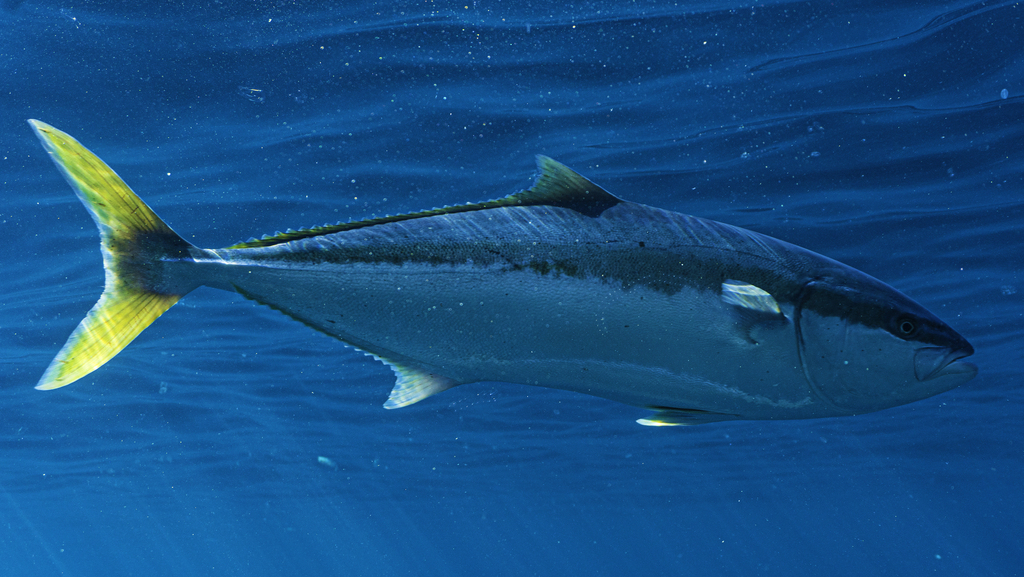
Known globally as Yellowtail Kingfish, or simply "Kingies" in Australia and New Zealand, Seriola lalandi is a true bucket-list species for anglers worldwide. From the kelp forests of Baja California to the rocky reefs of South Africa, and the prolific waters of Australia and Japan, these magnificent amber-hued torpedoes offer an unparalleled fight. They are fast, unbelievably strong, and possess an aggressive temperament that makes every encounter an adrenaline-fueled battle of wits and will. If you're looking for a fish that will test your tackle, your knots, and your resolve, the Kingfish is your ultimate adversary. Get ready to learn how to Catch these incredible fish, because once you do, you'll be hooked for life.
When to Go (Best Seasons and Times)
Timing is crucial when targeting Kingfish, as their movements are heavily influenced by water temperature and bait availability. Generally, warmer months are prime, but specific regions have their nuances.
- Australia & New Zealand: The prime season typically runs from late spring through autumn (roughly October to May). During these months, warmer currents bring baitfish closer to shore and onto the reefs, signaling the arrival of hungry Kingfish. Summer (December-February) can be fantastic for topwater action, while autumn often sees larger fish gathering.
- South Africa: Kingfish are predominantly caught during the warmer summer and autumn months (November to April), especially along the Western Cape and Eastern Cape coasts.
- Japan: The warmer waters of summer and early autumn (June to October) are best, particularly around the southern islands.
- Baja California (Mexico) & Southern California (USA): Late spring through fall (May to November) offers the most consistent action as water temperatures rise and baitfish like mackerel and squid become abundant.
Best Times of Day: Kingfish are often most active during periods of low light. * Dawn and Dusk: These twilight hours are often the most productive. Kingfish use the reduced light to ambush baitfish, making them more susceptible to both live baits and artificial lures. * Tidal Movements: Strong tidal flows, especially around structure like reefs, headlands, and offshore islands, are key. Moving water often concentrates bait and makes Kingfish more aggressive. Look for the peak of the run-in or run-out tide. * Weather: Overcast days or periods of light rain can sometimes trigger a bite, as the reduced light penetration makes them bolder. Avoid extremely calm, clear, sunny days if possible, as Kingfish can become wary.
Where to Fish (Top Locations)
Kingfish are structure-oriented predators, often found around reefs, wrecks, headlands, islands, and kelp beds. Here are some top international regions and specific spots known for their Kingfish populations:
- Sydney Harbour & Port Stephens, New South Wales, Australia: These iconic locations offer incredible access to Kingfish, from smaller "rat" Kingies in the harbour to trophy fish around the heads and offshore reefs. Public boat ramps and charter options are abundant.
- Bay of Islands & Hauraki Gulf, North Island, New Zealand: Considered by many to be the spiritual home of Kingfish, these areas boast world-class populations. Numerous islands, deep channels, and prolific reefs provide endless opportunities. Many reputable charter operations are based here.
- Cape Point & False Bay, Western Cape, South Africa: The cooler, nutrient-rich waters here attract large Kingfish, especially around the rocky ledges and pinnacles. Shore-based angling can be productive, but boat access opens up more ground.
- Izu Islands & Goto Islands, Japan: These island chains are renowned for their incredible Kingfish (Buri/Kampachi) fishing, particularly for jigging and topwater techniques around offshore reefs and submerged structures.
- Cedros Island & Bahia Asuncion, Baja California, Mexico: These remote, pristine waters off the Pacific coast of Baja offer some of the best Kingfish (Yellowtail) fishing in North America, with abundant kelp forests and rocky reefs holding massive fish.
- Catalina Island & Channel Islands, Southern California, USA: While not as prolific as their Baja counterparts, Southern California's offshore islands and kelp beds offer excellent opportunities for Kingfish (Yellowtail) during the warmer months. Access is typically via private boat or sportfishing charters from mainland ports.
When fishing internationally, always consider local knowledge. Local tackle shops are invaluable resources for current conditions and specific hotspots.
How to Fish (Proven Techniques)
Kingfish are powerful and adaptable, responding to a variety of techniques. Here's a breakdown from beginner-friendly to more advanced.
1. Beginner: Live Baiting
This is arguably the most effective and often easiest way to hook a Kingfish.
- Source Your Bait: Catch fresh baitfish like squid, mackerel, yakkas (yellowtail scad), or pilchards using bait jigs or a cast net. Fresh, lively bait is key.
- Rigging:
- Use a strong circle hook (6/0 to 10/0 depending on bait size) through the nose or shoulder of your live bait.
- Attach a heavy fluorocarbon leader (60-100lb) to your main braided line with a strong knot (e.g., FG knot).
- Consider a small running ball sinker if you need to get the bait down quickly in current, otherwise, fish it unweighted for a natural presentation.
- Deployment: Position your boat or cast your bait near known Kingfish structure (reefs, wrecks, drop-offs). Let the bait swim naturally.
- The Bite: When a Kingfish strikes, let it run for a few seconds to ensure it has swallowed the bait before gently lifting the rod to set the circle hook. Do not strike aggressively.
2. Intermediate: Jigging (Vertical & Slow Pitch)
Jigging is a highly effective way to target Kingfish holding deeper around structure.
- Vertical Jigging:
- Use heavy, fast-dropping metal jigs (150-300g+) in various shapes and colours.
- Drop the jig to the desired depth (often near the bottom or bait schools).
- Employ a fast, erratic retrieve: crank the reel quickly while simultaneously lifting and dropping the rod tip, making the jig dart and flash like a fleeing baitfish.
- Be ready for a strike on the drop or during the retrieve.
- Slow Pitch Jigging:
- This technique uses lighter, more parabolic rods and specially designed jigs that flutter and fall enticingly.
- Drop the jig, then use a series of slow lifts, pauses, and controlled drops, allowing the jig to "dance" and attract curious Kingfish.
- This method can be incredibly effective when Kingfish are finicky or holding tight to structure.
3. Advanced: Topwater & High-Speed Spinning
For the ultimate visual thrill, topwater fishing for Kingfish is hard to beat.
- Topwater (Poppers & Stickbaits):
- Cast large poppers or stickbaits towards structure or busting bait schools.
- Poppers: Retrieve with a series of sharp, downward rod tip jerks to create a "bloop" and splash, imitating a struggling baitfish.
- Stickbaits: Retrieve with a "walk-the-dog" action (side-to-side sashay) or a fast, erratic retrieve to imitate fleeing bait.
- Be prepared for explosive surface strikes!
- High-Speed Spinning (Casting Lures):
- Use heavy-duty spinning gear to cast metal slugs, soft plastics, or hardbody lures a long distance.
- Retrieve at high speed, often with a twitching action, to mimic fleeing baitfish. This is particularly effective when Kingfish are actively feeding on the surface or busting bait.
Who to Go With (Guides, Groups, or Solo)
Your choice depends on your experience, budget, and access to suitable vessels.
- Guided Charters (Recommended for International & Beginners):
- Pros: Guides provide all the necessary gear, local knowledge of hotspots, current conditions, and techniques. They ensure safety and greatly increase your chances of success, especially in unfamiliar waters. This is highly recommended for your first Kingfish trip, particularly in international destinations like New Zealand, Australia, or Baja.
- Cons: Can be expensive (see "Expected Costs").
- Fishing Groups/Shared Charters:
- Pros: A more budget-friendly way to experience a guided trip. You share the cost with other anglers.
- Cons: Less personalized attention, and you might have to compromise on fishing spots or techniques.
- Solo/DIY (Experienced Anglers with Own Boat):
- Pros: Ultimate freedom to fish when and where you want. Cost-effective in the long run if you already own a boat and gear.
- Cons: Requires significant local knowledge, navigation skills, safety preparedness, and a substantial investment in a suitable vessel and tackle. Not recommended for beginners or first-time international trips unless you're joining an experienced local.
For international trips, always research reputable charter operators well in advance. Look for guides specializing in Kingfish and check their reviews.
Essential Gear Recommendations
Kingfish demand robust tackle. Don't skimp on quality, as a powerful Kingie will expose any weakness.
- Rods:
- Spinning Rods (Boat): 7-8ft, PE4-8 rated (40-80lb braid), fast action, heavy power.
- Budget: Shimano Backbone Elite or Daiwa Seajigger → Shop on Amazon
- Premium: Shimano Ocea Jigger or Daiwa Saltiga Series → Shop on Amazon
- Jigging Rods: 5'6"-6'6", PE4-8 rated, parabolic action (for slow pitch) or fast action (for vertical).
- Budget: Penn Carnage II Jigging Rod → Shop on Amazon
- Premium: Ocea Jigger Slow Jig or Carpenter BlueFish Series → Shop on Amazon
- Spinning Rods (Boat): 7-8ft, PE4-8 rated (40-80lb braid), fast action, heavy power.
- Reels:
- Heavy-Duty Spinning Reels: Size 8000-20000, high retrieve ratio for jigging/topwater, excellent drag system (20kg+ / 45lb+), high line capacity.
- Budget: Penn Spinfisher VI or Shimano Saragosa SW → Shop on Amazon
- Premium: Shimano Stella SW or Daiwa Saltiga → Shop on Amazon
- Heavy-Duty Spinning Reels: Size 8000-20000, high retrieve ratio for jigging/topwater, excellent drag system (20kg+ / 45lb+), high line capacity.
- Line:
- Main Line: Braided PE line, 50-80lb (PE4-PE8) for spinning and jigging. Choose a high-quality, smooth casting braid.
- Budget: PowerPro Braided Line → Shop on Amazon
- Premium: Varivas Avani Casting PE or Daiwa J-Braid Grand → Shop on Amazon
- Leader: Fluorocarbon leader, 60-100lb, abrasion-resistant.
- Budget: Seaguar Blue Label Fluorocarbon → Shop on Amazon
- Premium: Yozuri H.D. Carbon Leader → Shop on Amazon
- Main Line: Braided PE line, 50-80lb (PE4-PE8) for spinning and jigging. Choose a high-quality, smooth casting braid.
- Terminal Tackle:
- Hooks: Strong, sharp circle hooks (6/0-10/0) for live bait; heavy-duty assist hooks for jigs; strong trebles for lures.
- Owner Mutu Light Circle Hooks → Shop on Amazon
- BKK Raptor-Z Treble Hooks → Shop on Amazon
- Swivels & Split Rings: Heavy-duty, high-breaking strain.
- Owner Hyper Wire Split Rings → Shop on Amazon
- Spro Power Swivels → Shop on Amazon
- Hooks: Strong, sharp circle hooks (6/0-10/0) for live bait; heavy-duty assist hooks for jigs; strong trebles for lures.
- Lures:
- Jigs: Metal vertical jigs (150-300g) in various colours (sardine, pink, blue/silver); slow pitch jigs.
- Shimano Butterfly Jigs → Shop on Amazon
- Jyg Pro Slow Pitch Jigs → Shop on Amazon
- Topwater: Poppers (150-250mm) and stickbaits (150-250mm).
- Halco Roosta Popper → Shop on Amazon
- Shimano Ocea Pencil → Shop on Amazon
- Jigs: Metal vertical jigs (150-300g) in various colours (sardine, pink, blue/silver); slow pitch jigs.
- Safety & Accessories:
- Fishing Pliers: Heavy-duty, to remove hooks and cut heavy leader.
- Lip Grips/Gaff: For safe handling and landing.
- Sun Protection: Hat, polarized sunglasses, long-sleeved shirt, sunscreen.
- First Aid Kit: Always essential.
- VHF Radio/Satellite Phone: Crucial for offshore safety.
Expected Costs (Full Setup vs. Budget Version)
Costs can vary wildly depending on your location, gear choices, and whether you opt for a guided trip. Here's a general breakdown for an international Kingfish adventure, using Australian Dollars (AUD) as the primary currency with USD equivalents.
1. Licensing/Permits: * Australia (e.g., NSW Fishing Fee): ~AUD $14-85 (USD $9-55) for 3 days to 3 years. * New Zealand (Recreational Fishing Permit): Often included in charter fees, but check if fishing independently. * Mexico (Baja California Fishing License): ~USD $30-50 for a multi-day or annual permit. * Always check current fees with the relevant national or state fisheries authority before fishing.
2. Guided Charter Trip (Full Day): * Australia/New Zealand: AUD $300-600 per person (USD $200-400) for a shared charter, or AUD $1500-3000+ (USD $1000-2000+) for a private charter. * Baja California: USD $250-500 per person for a shared panga trip, or USD $800-2000+ for a private sportfisher. * Includes boat, guide, basic tackle, and sometimes lunch.
3. Gear Costs:
- Full Setup (Premium):
- Rod (e.g., Shimano Ocea Jigger): AUD $600-1200 (USD $400-800)
- Reel (e.g., Shimano Stella SW): AUD $1000-2000+ (USD $700-1400+)
- Braided Line (300m): AUD $80-150 (USD $55-100)
- Fluorocarbon Leader: AUD $40-80 (USD $25-55)
- Assortment of Lures/Jigs: AUD $100-300+ (USD $70-200+)
- Terminal Tackle/Hooks: AUD $50-100 (USD $35-70)
- Total Premium Gear: AUD $1870-3830+ (USD $1285-2630+)
- Budget Setup (Functional):
- Rod (e.g., Penn Carnage II): AUD $200-400 (USD $135-270)
- Reel (e.g., Penn Spinfisher VI): AUD $250-500 (USD $170-340)
- Braided Line (300m): AUD $40-80 (USD $25-55)
- Fluorocarbon Leader: AUD $20-40 (USD $15-25)
- Assortment of Lures/Jigs: AUD $50-150 (USD $35-100)
- Terminal Tackle/Hooks: AUD $20-50 (USD $15-35)
- Total Budget Gear: AUD $580-1220 (USD $395-825)
4. Travel & Accommodation: * Highly variable, but for an international trip, this will likely be the largest expense. Budget several thousands of dollars for flights, hotels, and local transport.
Overall Trip Cost (International, 3-5 Days, 1-2 Guided Charters): * Budget: AUD $2000-4000 (USD $1350-2700) (including budget gear, shared charters, basic accommodation) * Mid-Range: AUD $4000-8000 (USD $2700-5400) (including mid-range gear, shared/private charters, comfortable accommodation) * Premium: AUD $8000+ (USD $5400+) (including premium gear, private charters, high-end accommodation/resorts)
Regulations and Conservation
Kingfish are a highly valued recreational and commercial species, and responsible angling is crucial for their long-term sustainability. Regulations vary significantly by region and country.
- Australia (e.g., New South Wales): Regulated by NSW Department of Primary Industries (DPI) Fisheries. There are specific size limits (e.g., minimum legal length), bag limits (number of fish per person per day), and sometimes possession limits. Certain areas may also have seasonal closures or gear restrictions.
- New Zealand: Regulated by Fisheries New Zealand. Similar to Australia, there are minimum size limits and daily bag limits. Specific rules apply to different fishing methods and areas.
- South Africa: Regulated by the Department of Agriculture, Forestry and Fisheries (DAFF). Regulations will include minimum size limits and bag limits.
- Japan: Regulations are managed by the Fisheries Agency of Japan and prefectural governments, often with specific rules for different species and regions.
- Mexico (Baja California): Regulated by CONAPESCA (Comisión Nacional de Acuacultura y Pesca). A valid Mexican fishing license is required for all anglers, and there are specific bag and size limits for various species, including Yellowtail.
- United States (Southern California): Regulated by the California Department of Fish and Wildlife (CDFW). Yellowtail have specific size and bag limits, which can change seasonally.
Crucial Advice: ALWAYS check the most current regulations with the relevant national or state fisheries authority before you go fishing. Regulations can change frequently, and ignorance is not an excuse. Familiarize yourself with size limits, bag limits, gear restrictions, and any protected areas.
Conservation: While Kingfish populations are generally considered healthy in many regions, they are susceptible to overfishing due. Practice catch and release, especially for very large breeding fish or smaller "rats" that haven't had a chance to reproduce. If you plan to keep fish, do so responsibly within limits, and ensure proper handling for consumption. Support sustainable fishing practices and organizations.
Pro Tips and Common Mistakes to Avoid
Pro Tips:
- Sharp Hooks, Strong Knots: Kingfish have tough mouths, and their brutal fights test every connection. Use razor-sharp hooks and master strong, reliable knots like the FG knot for braid-to-leader, and improved clinch or palomar for terminal tackle.
- Match the Hatch: Observe what baitfish are present in the area. If Kingfish are feeding on small squid, use a squid-imitating jig or lure. If they're busting on pilchards, use a pilchard-coloured stickbait or metal slug.
- Vary Your Retrieve: If one retrieve speed or jigging action isn't working, change it up. Sometimes a subtle flutter is key, other times a high-speed burn is needed. Experiment until you find what triggers a bite.
- Burley/Chumming: In some areas, a consistent burley trail (chopped pilchards, tuna, or berley pellets) can draw Kingfish closer to your boat, especially when live baiting.
- Fight Smart, Not Hard: Kingfish are incredibly powerful. Don't try to winch them in. Use your rod to pump and wind, keeping constant pressure. Let the drag do its job, and be prepared for long, sustained runs.
- Check Your Drag: Set your drag correctly before you hook up. Too loose, and you'll get spooled; too tight, and you'll snap your line or break your rod. A good starting point is 1/3 of your main line's breaking strain.
- Fish the "Edges": Kingfish often patrol the edges of structure, current lines, and kelp beds, ambushing prey. Focus your efforts on these transition zones.
Common Mistakes to Avoid:
- Undergunned Tackle: Using gear that's too light is a recipe for heartbreak. Kingfish will expose weak knots, cheap hooks, and inadequate drag systems.
- Not Checking Your Line: After a tough fight or a snag, always run your hands over your leader and main line for nicks and abrasions. Replace damaged sections immediately.
- Panicking on the Initial Run: When a Kingfish hits, it's often a violent, unstoppable run. Resist the urge to tighten the drag or try to stop it. Let the fish run, trust your drag, and keep the rod tip up.
- Poor Knot Tying: A weak knot is the weakest link. Practice your knots until they are perfect under pressure.
- Not Being Prepared for a Strike: Kingfish hits are often sudden and brutal. Always be holding your rod, thumb on the spool (if baitcasting), or ready to react. Don't leave your rod unattended.
- Ignoring Local Advice: Local guides and tackle shop owners are invaluable resources. Listen to their advice on current conditions, hotspots, and preferred techniques.
Conclusion
The Yellowtail Kingfish is more than just a fish; it's an experience. The screaming reel, the relentless fight, the vibrant flash of gold and amber as it nears the boat – these are the moments that define a true angling adventure. Whether you're chasing them on the pristine reefs of New Zealand, the kelp forests of Baja, or the bustling waters of Sydney Harbour, Kingfish offer a challenge that will push your skills and provide memories to last a lifetime. With the right preparation, the proper gear, and a healthy dose of determination, you'll be well on your way to catching these magnificent predators. So, gear up, plan your next adventure, and get ready to feel the power of a true King of the ocean.
Next time, we'll dive into the art of targeting powerful pelagics in the open ocean. Stay tuned!
As an Amazon Associate I earn from qualifying purchases at no extra cost to you. Links above are affiliate search links — prices may vary. Generated 2026-11-03