
Catch Dolly Varden Like a Pro: Complete Fishing Guide
Introduction
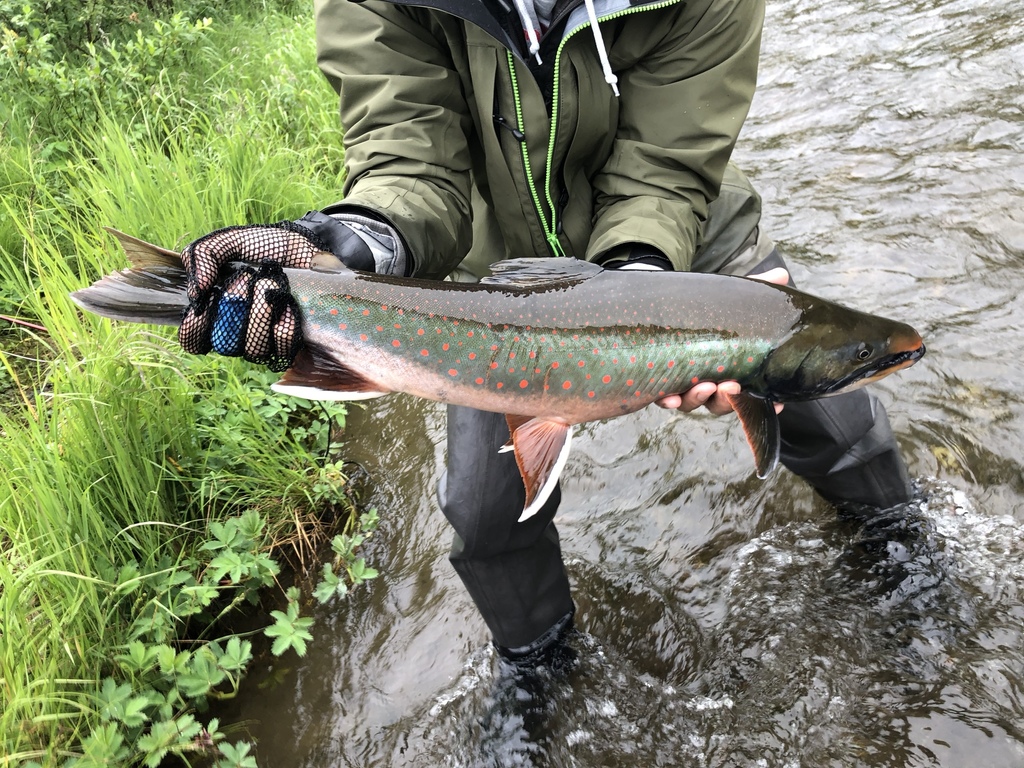
The cold, clear water rushed past my waders as I stood mid-river, the crisp Alaskan air biting at my cheeks. Suddenly, my line went taut, a jolt of electricity shooting up my arm. The rod bent violently, and the water exploded as a flash of iridescent green, orange, and crimson broke the surface. It wasn't a salmon, nor a standard trout. This was a Dolly Varden, a true jewel of the northern waters, fighting with a ferocity that belied its size. Its vibrant colors glowed, a testament to the wild, untamed beauty of its habitat.
Fishing for Dolly Varden isn't just about catching a fish; it's an immersive experience in some of the most stunning wilderness on Earth. These aggressive, opportunistic char are a thrill to pursue, offering explosive strikes and spirited battles that will challenge anglers of all skill levels. From the vast river systems of Alaska to the pristine coastal streams of the Pacific Northwest and beyond, Dolly Varden offer an accessible and incredibly rewarding angling adventure. Their presence often signals a healthy ecosystem, and their willingness to strike a variety of presentations makes them a fantastic target for both fly and spin anglers. Prepare to discover the allure of the Dolly Varden, a species that truly embodies the spirit of wild fishing.
When to Go (Best Seasons and Times)
Dolly Varden are active throughout the open water seasons, but certain times offer peak opportunities for success. Understanding their movements and feeding patterns is key to a productive trip.
- Spring (Late April - Early June): As ice breaks up and waters begin to warm, Dolly Varden emerge from their overwintering areas in lakes and larger river systems and begin to migrate towards feeding grounds. This is an excellent time to target them as they are hungry and actively searching for food, often following salmon smolt out to sea or moving into tributary streams. Early spring can see them in larger river systems.
- Summer (Late June - August): This is prime time for Dolly Varden fishing. They are highly active, feeding aggressively on insects, baitfish, and most notably, salmon eggs as the first salmon runs begin. You'll find them in a wide range of habitats, from coastal estuaries to high mountain lakes and rivers. The long daylight hours in northern regions mean extended fishing opportunities.
- Fall (September - October): Many anglers consider fall the absolute best time to target Dolly Varden. As salmon runs peak, Dolly Varden congregate in large numbers behind spawning salmon, gorging themselves on protein-rich eggs. This is when they are at their most colorful, with spawning males displaying stunning oranges, reds, and greens. They are incredibly aggressive and can be caught in high numbers.
Best Times of Day & Weather: Dolly Varden are often most active during the cooler parts of the day – early mornings and late evenings. Overcast days can extend their feeding windows, making them active throughout the day. They tend to be less active during bright, sunny afternoons, often retreating to deeper pools or shaded areas. Stable weather patterns are generally best, but a slight drop in barometric pressure or light rain can sometimes trigger a feeding frenzy, especially if it helps raise water levels slightly or dislodge insects.
Regional Tips: In Alaska and northern British Columbia, the salmon runs dictate much of the Dolly Varden activity. Timing your trip with salmon spawning is crucial for egg-pattern fishing. In the Pacific Northwest (Washington/Oregon), while salmon eggs are still important, Dolly Varden also key in on resident insect populations and baitfish, making them more consistently available throughout the summer months in appropriate waters.
Where to Fish (Top Locations)
Dolly Varden thrive in cold, clean water, making their prime habitats some of the most breathtaking places on the planet. Here are some top locations for targeting these magnificent char:
- Kenai Peninsula, Alaska: This region is a Dolly Varden paradise. Rivers like the Kenai, Russian, Kasilof, and their numerous tributaries offer exceptional fishing, especially during salmon runs. Public access points are abundant, and many sections are wadeable.
- Southeast Alaska (e.g., Juneau, Sitka, Ketchikan areas): Countless rivers, streams, and coastal estuaries in Southeast Alaska hold robust populations of Dolly Varden. Many are accessible by boat, floatplane, or even short hikes from road systems. The Mendenhall River near Juneau is a popular spot.
- Olympic Peninsula, Washington: The pristine rivers flowing out of the Olympic National Park, such as the Hoh, Queets, Sol Duc, and Elwha, are home to resident and anadromous (sea-run) Dolly Varden. Public access is often found via state and national park lands.
- Northern Cascade Mountains, Washington: Lakes and rivers in areas like the North Cascades National Park Complex and surrounding national forests offer opportunities for Dolly Varden, particularly in higher elevation, colder waters. These often require hiking to access.
- British Columbia, Canada: While this post focuses primarily on US opportunities, it's worth noting that British Columbia's coastal rivers and interior lakes offer world-class Dolly Varden fishing. Rivers on Vancouver Island and those flowing into the Skeena River system are particularly renowned. Many provincial parks and Crown land areas offer public access.
When choosing a location, consider accessibility, whether you prefer river or lake fishing, and what time of year you plan to go. Many of these locations offer beginner-friendly access points and ample space for anglers.
How to Fish (Proven Techniques)
Dolly Varden are aggressive and opportunistic, making them a fantastic target for both fly and spin anglers. Here's how to approach them:
For Beginners (Spin Fishing):
- Identify Holding Water: Look for seams where fast water meets slow water, the tail-outs of pools, eddies behind rocks or logjams, and any structure that provides cover or a current break. Dolly Varden often hold in these spots, waiting for food to drift by.
- Choose Your Lure: Start with small inline spinners (sizes #1 to #3) in silver, gold, or brass, often with a red or orange accent. Small spoons (1/8 to 1/4 oz) also work well.
- Cast Upstream or Up-and-Across: Cast your lure slightly upstream and across the current from where you suspect fish are holding. This allows your lure to sink and drift naturally into their strike zone.
- Retrieve: Begin a slow, steady retrieve as your lure swings downstream. You want the lure to tumble and flash naturally, mimicking a fleeing baitfish or insect. Vary your retrieve speed until you find what triggers a strike. Sometimes a twitch or pause can be effective.
- Set the Hook: Dolly Varden strikes can be subtle or aggressive. If you feel a tap or your line stops, set the hook with a firm, upward sweep of your rod.
Advanced Tips:
- Fly Fishing with Egg Patterns: During salmon spawning runs, fly fishing with imitation salmon egg patterns (e.g., Glo Bugs, Sucker Spawn) is incredibly effective. Drift these patterns dead-drift under an indicator, mimicking natural eggs. Vary egg size and color.
- Streamer Fishing: Dolly Varden love to chase baitfish. Stripping streamers (e.g., Sculpzillas, Dolly Llama, Clouser Minnows) in white, olive, or black can provoke aggressive strikes, especially in larger rivers and estuaries. Vary your retrieve speed and depth.
- Bead Fishing: In areas where it's legal (check regulations carefully!), bead fishing is highly effective. A small plastic bead, carefully pegged a few inches above a hook, imitates a single salmon egg drifting downstream. This requires precise weight and drift control.
- Reading the Water: Learn to identify subtle current breaks, depth changes, and underwater structure. Dolly Varden are often found in predictable locations. Don't just cast blindly; read the water to identify potential holding spots.
Who to Go With (Guides, Groups, or Solo)
Deciding whether to go with a guide, a group, or solo depends on your experience level, budget, and desired adventure.
- Guided Trips: For beginners or those new to a specific region, a guided trip is an invaluable investment. Local guides possess intimate knowledge of the best fishing spots, current conditions, and effective techniques. They typically provide all necessary gear, transportation (often by boat), and expertise, dramatically increasing your chances of success. Expect to pay anywhere from $400-$800+ USD for a full-day guided trip, depending on the region and services included. This is highly recommended for your first time in a new area.
- Going with a Group: If you have experienced angler friends, joining them can be a great way to learn and share costs. This offers a balance between the independence of solo fishing and the shared knowledge of a guide. You can split gas, lodging, and even some gear costs.
- Solo Fishing (DIY): For experienced anglers comfortable with navigation, reading water, and self-sufficiency, solo fishing offers the ultimate freedom and a deep connection with nature. This is the most budget-friendly option, but requires thorough research, proper safety precautions, and a good understanding of the area you're fishing. Many public access points on rivers and lakes are perfect for DIY fishing.
Essential Gear Recommendations
Having the right gear makes all the difference in comfort and success when fishing for Dolly Varden.
- Rod & Reel:
- Spin Fishing: A light to medium-light spinning rod (6'6" to 7'6") with a fast action is ideal. Pair it with a 1000-2500 series spinning reel.
- Shimano Sedona FL Spinning Combo → Shop on Amazon (Budget-Friendly)
- St. Croix Triumph Spinning Rod with Pflueger President XT Reel → Shop on Amazon (Mid-Range)
- Fly Fishing: A 5 or 6-weight fly rod (8'6" to 9') is versatile for Dolly Varden. Pair it with a matching fly reel with a reliable drag.
- Orvis Encounter Fly Rod Outfit → Shop on Amazon (Budget-Friendly)
- Redington Classic Trout Fly Rod with Behemoth Reel → Shop on Amazon (Mid-Range)
- Spin Fishing: A light to medium-light spinning rod (6'6" to 7'6") with a fast action is ideal. Pair it with a 1000-2500 series spinning reel.
- Line:
- Spin Fishing: 6-10 lb monofilament or fluorocarbon main line, or 10-15 lb braided line with a 6-8 lb fluorocarbon leader.
- Berkley Trilene XL Monofilament → Shop on Amazon
- Seaguar InvizX Fluorocarbon → Shop on Amazon
- Fly Fishing: Weight-forward floating fly line, matched to your rod weight. Tapered leaders (9ft, 3X-5X) and tippet material.
- Rio Mainstream Trout Fly Line → Shop on Amazon
- Scientific Anglers Absolute Trout Leader & Tippet → Shop on Amazon
- Spin Fishing: 6-10 lb monofilament or fluorocarbon main line, or 10-15 lb braided line with a 6-8 lb fluorocarbon leader.
- Terminal Tackle:
- Spin Lures: Small inline spinners (Mepps Aglia, Panther Martin), small spoons (Kastmaster, Little Cleo), soft plastic beads (8-12mm in egg colors).
- Mepps Aglia Spinner Assortment → Shop on Amazon
- Glo-Bug Yarn for Egg Flies → Shop on Amazon
- Flies: Egg patterns (Glo Bugs, Sucker Spawn), small streamers (Woolly Buggers, Dolly Llamas, Sculpzillas), stonefly nymphs.
- Assorted Egg Fly Pack → Shop on Amazon
- Woolly Bugger Fly Assortment → Shop on Amazon
- Spin Lures: Small inline spinners (Mepps Aglia, Panther Martin), small spoons (Kastmaster, Little Cleo), soft plastic beads (8-12mm in egg colors).
- Waders & Boots: Chest waders (neoprene for cold weather, breathable for warmer) and wading boots with good ankle support and felt or rubber soles for traction.
- Frogg Toggs Canyon II Waders → Shop on Amazon (Budget-Friendly)
- Simms Tributary Waders & Boots → Shop on Amazon (Mid-Range)
- Other Essentials:
- Net: Rubber mesh landing net for safe fish handling.
- Pliers/Forceps: For hook removal.
- Sun Protection: Hat, sunglasses (polarized are a must for spotting fish).
- Rain Gear: Always be prepared for changing weather.
- Backpack: To carry water, snacks, and extra layers.
Expected Costs (Full Setup vs. Budget Version)
The cost of a Dolly Varden fishing trip can vary widely. Here’s a realistic breakdown in USD:
Budget-Friendly Setup (Focus on Essentials):
- Fishing License: $25-$75 (e.g., Alaska non-resident annual is $100, a 1-day is $15; Washington non-resident is $84.50 for freshwater annual). Always check current fees with the Alaska Department of Fish and Game or the Washington Department of Fish and Wildlife.
- Rod & Reel Combo: $80-$150
- Line & Leader/Tippet: $20-$40
- Lures/Flies: $30-$60 (a small starter kit)
- Waders & Boots: $150-$250 (entry-level breathable waders)
- Basic Tools (Pliers, Net): $30-$60
- Total for Gear (excluding license): $310-$560
Full Setup (Quality Gear & Potential Guide):
- Fishing License: $25-$75 (as above)
- Rod & Reel (Mid-Range): $250-$500
- Premium Line & Leader/Tippet: $50-$100
- Extensive Lure/Fly Selection: $100-$200
- Quality Waders & Boots: $350-$600
- Essential Tools & Accessories (Vest/Pack, Net, etc.): $100-$200
- Optional Full-Day Guided Trip: $400-$800+ (per person, often includes gear)
- Total for Gear (excluding license & guide): $850-$1600
- Total with Guide (one trip): $1250-$2400
Remember, these are estimates. Costs can be further reduced by borrowing gear or buying used equipment. Always check the current fishing license fees and regulations with the relevant state fish and wildlife agency (e.g., Alaska Department of Fish and Game, Washington Department of Fish and Wildlife) before your trip.
Regulations and Conservation
Regulations for Dolly Varden fishing are in place to ensure sustainable populations for future generations. It is your responsibility as an angler to be aware of and adhere to these rules.
- Check Current Regulations: Before heading out, always consult the most current regulations from the appropriate authority. For Alaska, this is the Alaska Department of Fish and Game. For Washington, it’s the Washington Department of Fish and Wildlife. For international locations like British Columbia, consult the provincial fisheries authority. Regulations can change annually or even seasonally and may vary significantly by specific river, lake, or even section of a river.
- Key Regulatory Considerations:
- Bag Limits: How many fish you can keep per day and in possession.
- Size Limits: Minimum or maximum lengths for kept fish.
- Gear Restrictions: Specific rules on what lures, baits, or hooks are allowed (e.g., single barbless hooks only, no bait).
- Season Dates: When specific waters are open or closed to fishing for Dolly Varden.
- Special Waters: Some areas may have unique regulations, such as "catch and release only" zones or designated fly-fishing-only waters.
- Conservation: Dolly Varden are native char and an important part of their ecosystems. While generally robust, they face pressures from habitat loss and climate change. Practicing responsible catch and release, especially for larger breeding fish, helps ensure healthy populations.
- Handle Fish Gently: Minimize time out of water, use a rubber mesh net, and handle them with wet hands.
- Release Quickly: If releasing, get the fish back into the water as quickly as possible.
- Respect Spawning Fish: Avoid targeting actively spawning fish to minimize disturbance to the reproductive cycle.
Your adherence to regulations and ethical angling practices directly contributes to the conservation of this incredible species and the pristine environments they inhabit.
Pro Tips and Common Mistakes to Avoid
Even seasoned anglers can learn new tricks, and beginners often make similar mistakes. Here are some insights to boost your Dolly Varden success:
Pro Tips:
- Follow the Salmon: Dolly Varden are masters at following salmon runs to feast on eggs. If you find spawning salmon, look for Dolly Varden in the deeper pools and runs just downstream, eagerly awaiting their next meal.
- Go Small and Natural: While they can be aggressive, Dolly Varden often key in on small, natural presentations. Don't be afraid to downsize your lures or flies, especially when the water is clear or the fish are pressured.
- Stealth is Key: Dolly Varden in clear, shallow waters can be surprisingly spooky. Approach fishing spots quietly, minimize casting shadows, and wear natural-colored clothing.
- Vary Your Retrieve: If one retrieve speed or action isn't working, change it up. Try short twitches, long pauses, or a faster retrieve. Sometimes a subtle change is all it takes to trigger a strike.
- Stay Mobile: Dolly Varden are often found in pockets. If you're not getting bites in one spot after 15-20 minutes, move to another promising area. Covering water can be more productive than staying put.
- Check Under Overhangs: Dolly Varden love to hide under cut banks, overhanging vegetation, or submerged logs. These spots offer cover and an ambush point for passing food.
- Bring a Thermometer: Dolly Varden prefer colder water. If the water temperatures are too high (above 60°F / 15°C), they will be less active and more stressed if caught. Consider targeting them elsewhere or at cooler times of day.
Common Mistakes to Avoid:
- Too Heavy Gear: Using overly heavy rods, lines, or leaders can make presentations unnatural and spook fish, especially in clear water.
- Ignoring Water Conditions: Not adjusting your lure/fly size, color, or presentation to match water clarity, depth, and current speed.
- Being Too Noisy: Stomping along the bank, loud talking, or splashing can send Dolly Varden scattering.
- Improper Fish Handling: Squeezing fish, dragging them on rocks, or keeping them out of water for too long stresses them, reducing their survival chances if released.
- Not Checking Regulations: This is a critical mistake that can lead to fines and harm fish populations. Always, always verify current rules.
- Giving Up Too Soon: Dolly Varden can be finicky. Persistence, experimentation, and moving to new spots are often rewarded.
Conclusion
Catching Dolly Varden is more than just a fishing trip; it's an adventure into the heart of pristine wilderness. Their aggressive strikes, stunning beauty, and the sheer joy of pursuing them in some of the most breathtaking landscapes on Earth make them an unforgettable target for any angler. From the vibrant fall colors of spawning fish to the thrill of a summer day on a remote Alaskan river, Dolly Varden offer an experience that connects you deeply with nature.
Whether you choose to chase them with a seasoned guide or embark on a solo journey, the pursuit of these magnificent char promises excitement, challenge, and memories that will last a lifetime. So, gear up, check those regulations, and prepare to discover the magic of Dolly Varden fishing. The wild waters are calling!
Stay tuned for our next adventure, where we'll delve into the thrilling world of hunting for challenging big game across the globe.
As an Amazon Associate I earn from qualifying purchases at no extra cost to you. Links above are affiliate search links — prices may vary. Generated 2026-11-01