
Catch Roosterfish Like a Pro: Complete Fishing Guide
Introduction
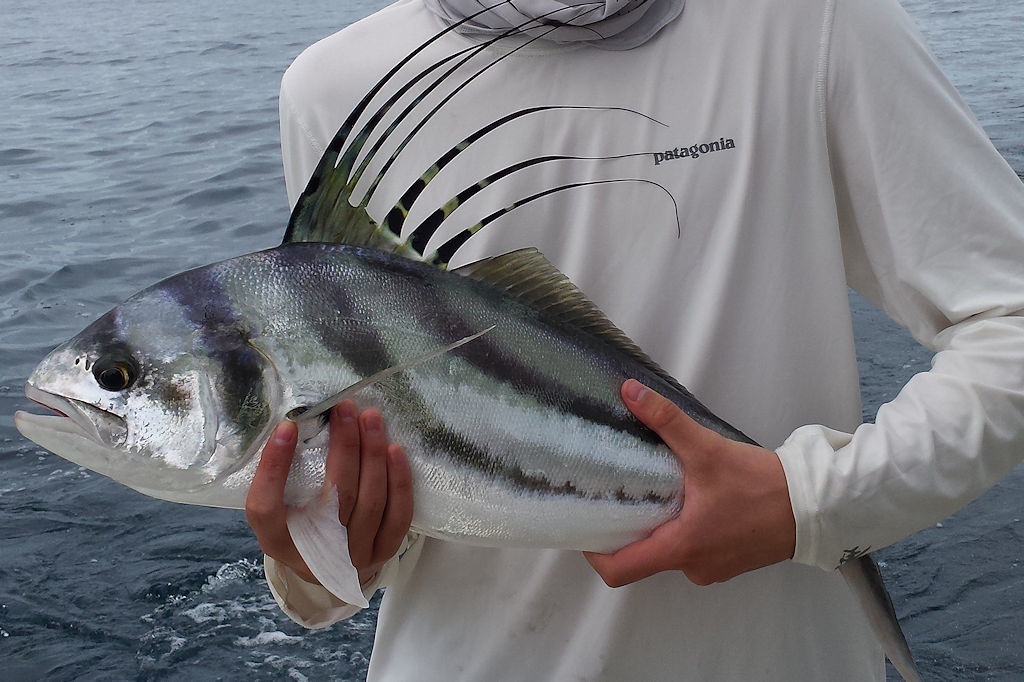
The morning sun peeks over the rugged Pacific coastline, painting the sky in fiery oranges and purples. The air is thick with anticipation, the salty scent of the ocean mingling with the promise of adventure. Suddenly, a dark, muscular torpedo explodes through the emerald green water just beyond the surf line. Its iridescent, comb-like dorsal fin, an unmistakable signature, stands erect like a Roman helmet as it charges a school of baitfish. This, my friends, is the Roosterfish – a creature of immense power, stunning beauty, and a predatory instinct that will test every fiber of your angling prowess.
From my two decades guiding across the globe, few fish ignite the passion quite like the Roosterfish. Its sheer strength, blistering runs, and the sheer visual spectacle of its hunt make it one of the most sought-after inshore game fish on the planet. Pursuing these magnificent creatures is more than just fishing; it’s an immersive experience in some of the most breathtaking coastal environments imaginable. Get ready to dive into the world of this Pacific icon, from the sun-drenched beaches of Central America to the rugged shores of Mexico.
When to Go (Best Seasons and Times)
Roosterfish are year-round residents in many parts of their range, but certain seasons offer peak action. Generally, the warmer months bring more consistent activity, as baitfish schools are abundant.
- Mexico (Baja California Sur, Pacific Coast): The prime season runs from May through October. During these months, water temperatures are ideal, and large schools of baitfish like mullet and caballito congregate close to shore. While you can find them outside this window, the numbers and size tend to be better in the warmer period.
- Central America (Costa Rica, Panama, Nicaragua): The dry season, typically December through April, offers excellent conditions with calmer seas and clear water. However, the rainy season (May-November) can also be productive, especially as rivers swell and push bait into the estuaries and nearshore waters. The "shoulder" months (April-May, Nov-Dec) often provide a fantastic balance of good weather and active fish.
- South America (Ecuador, Peru): Similar to Central America, the warmer months from December to May are generally considered prime.
Best Times of Day: Like many predatory fish, Roosterfish are most active during the low-light periods. * First Light: The hours immediately following sunrise are often the most productive. The fish are actively hunting, and their visibility is at its peak. * Late Afternoon/Sunset: As the sun dips, they often resume their feeding patterns before nightfall. * Tides: Focus on incoming and outgoing tides, especially around river mouths, points, and rocky structures. Moving water concentrates bait and makes it easier for Roosters to ambush prey.
Weather Patterns: Calm, clear days are generally preferred, especially for sight fishing. However, a slight chop can sometimes be beneficial, breaking up the surface and providing cover for the fish. Avoid extremely rough seas, which make spotting fish and presenting lures difficult.
Where to Fish (Top Locations)
Roosterfish inhabit the Eastern Pacific, favoring rocky points, sandy beaches, river mouths, and inshore reefs. Here are some of the most renowned and accessible locations:
- Baja California Sur, Mexico: A legendary destination. From the southern tip around Cabo San Lucas up the Pacific side to Todos Santos and the East Cape, Baja offers incredible surf fishing opportunities. Look for them cruising sandy beaches with nearby rock formations.
- Costa Rica (Pacific Coast):
- Quepos/Manuel Antonio: Famous for its sportfishing fleet, you can target Roosters from pangas (small boats) or even from the beach.
- Osa Peninsula (Golfo Dulce): A more remote, pristine area offering incredible inshore action, often with less pressure.
- Guanacaste Province (Tamarindo, Papagayo): Excellent fishing around rocky points and river mouths.
- Panama (Pacific Coast):
- Boca Chica/Gulf of Chiriquí: Known for its volcanic islands and fertile waters, offering world-class Roosterfish opportunities, often combined with other species like Cubera snapper.
- Azuero Peninsula: More remote, with pristine beaches and river mouths.
- Nicaragua (Pacific Coast): Less developed but offers fantastic fishing, particularly around San Juan del Sur and the southern pacific coast. Abundant bait and structure make it a Roosterfish haven.
- Guatemala (Pacific Coast): While often renowned for billfish, the inshore waters around its Pacific coast also hold impressive Roosterfish, especially near river mouths and structure.
For beginners, hiring a local panga captain in places like Baja or Costa Rica is highly recommended. They know the local waters, bait sources, and where the fish are holding.
How to Fish (Proven Techniques)
Catching a Roosterfish requires a blend of skill, patience, and a bit of luck. Here’s a breakdown:
Step-by-Step for Beginners (Live Bait from Shore/Panga):
- Source Live Bait: The most effective method often involves live bait. Mullet, caballito (jack crevalle), ladyfish, or sardines are prime choices. You can catch them with a cast net or buy them from local bait fishermen.
- Rigging:
- Use a sturdy monofilament or fluorocarbon leader (60-80 lb test, 3-6 feet long) tied to your main line with a strong knot (e.g., FG knot).
- Attach a 7/0 to 10/0 circle hook (inline, non-offset) directly to the leader. Circle hooks minimize gut-hooking, crucial for catch-and-release.
- If fishing from shore in heavy current, a small egg sinker (1-2 oz) might be used above a swivel to help cast and hold the bait in place, but free-lining is often preferred.
- Spotting & Presentation (Shore):
- Walk the beaches at first light, looking for dark shapes, dorsal fins, or disruptions in the water.
- Cast your live bait beyond the surf break, allowing it to swim naturally. The key is to get it into the "strike zone" where Roosters patrol.
- Keep your rod tip low and be ready for an explosive strike.
- Spotting & Presentation (Panga/Boat):
- Your captain will use binoculars to spot cruising fish or locate bait schools.
- When a Roosterfish is spotted, the captain will position the boat for a cast.
- Cast your live bait (or lure) ahead of the fish's direction of travel, allowing it to intercept.
Advanced Tips:
- Popper/Stickbait Fury: For an adrenaline rush, throw large poppers (Yo-Zuri Surface Cruiser → Shop on Amazon or Halco Roosta Popper → Shop on Amazon) or stickbaits (Shimano Ocea Pencil → Shop on Amazon) around rocky points or where fish are actively busting bait. Cast far, retrieve fast, and be ready for a surface explosion. The retrieve should be aggressive and erratic, mimicking a fleeing baitfish.
- Sight Casting Mastery: Whether from a boat or beach, develop your ability to spot cruising Roosters. They often patrol just beyond the breakers or along structure. A quick, accurate cast is paramount. Always cast ahead of the fish, giving it time to react and intercept.
- Stealth and Observation: Roosterfish are wary. Approach quietly, especially when fishing from shore. Pay attention to bird activity, baitfish schools, and changes in water color – these are all clues to where Roosters might be lurking.
Who to Go With (Guides, Groups, or Solo)
The decision to go guided or DIY depends on your experience, budget, and the specific location.
-
Guided Trips (Highly Recommended for Roosterfish):
- Benefits: Local knowledge is invaluable. Guides know the hot spots, bait sources, and optimal techniques for the day. They provide specialized gear, boats (pangas or larger center consoles), and often handle licenses. This is especially true for international destinations where language barriers or local regulations can be challenging.
- Cost Context: A full-day panga charter in Mexico or Central America can range from $400-$800 USD, depending on the number of anglers and the boat's size/amenities. Larger, more luxurious center console charters can run $800-$1500+ USD.
- Reputable Outfitters: Look for operations in areas like Cabo San Lucas, Quepos, or Boca Chica with strong online reviews and affiliations with local fishing associations. Ask for references and clarify what's included (bait, tackle, lunch, drinks).
-
Going Solo/DIY (For Experienced Anglers):
- Benefits: More freedom, potentially lower daily costs (after initial gear investment). The satisfaction of finding and catching fish on your own terms.
- Challenges: Requires extensive research, sourcing your own bait (often difficult), having the right tackle, understanding local regulations, and navigating unfamiliar waters. From shore, it's more feasible, but a boat opens up many more opportunities.
- Cost Context: Your main costs will be gear, transportation, accommodation, and potentially bait. You'll save on guide fees but might spend more on trial and error.
For your first Roosterfish adventure, especially internationally, I strongly advise hiring a reputable local guide. It dramatically increases your chances of success and provides a safer, more enjoyable experience.
Essential Gear Recommendations
Landing a Roosterfish requires robust, reliable gear to withstand their explosive power.
- Rods:
- Spinning Rod (Medium-Heavy to Heavy): 7'6" to 9' fast-action rod, rated for 20-50 lb line. Shimano Teramar XX → Shop on Amazon or St. Croix Mojo Salt → Shop on Amazon
- Conventional Rod (Heavy): 7' to 8' rod, rated for 30-60 lb line, especially for live baiting from a boat. Penn Carnage III → Shop on Amazon
- Reels:
- Spinning Reel (6000-10000 size): Must have a smooth, powerful drag and high line capacity. Shimano Saragosa SW A → Shop on Amazon or Penn Spinfisher VI → Shop on Amazon
- Conventional Reel (30-50 size): Lever drag is preferred for quick adjustments. Shimano Talica II → Shop on Amazon or Penn Fathom II → Shop on Amazon
- Line:
- Main Line: 50-80 lb braided line for its strength, sensitivity, and casting distance. PowerPro Spectra → Shop on Amazon
- Leader: 60-100 lb fluorocarbon or monofilament leader. Fluorocarbon is less visible and more abrasion-resistant. Seaguar Blue Label Fluorocarbon → Shop on Amazon
- Hooks:
- Circle Hooks: 7/0 to 10/0 inline, non-offset circle hooks for live bait. Owner Mutu Light Circle Hooks → Shop on Amazon
- Lures:
- Poppers: Large (5-7 inch) surface poppers in white, chrome, or natural baitfish colors. Yo-Zuri Surface Cruiser → Shop on Amazon
- Stickbaits/Walk-the-Dog: Similar size to poppers for varied surface action. Shimano Ocea Pencil → Shop on Amazon
- Jigs: Heavy metal jigs (2-4 oz) for vertical jigging or casting into schools. Shimano Butterfly Flat-Fall Jig → Shop on Amazon
- Accessories:
- Pliers: Heavy-duty, corrosion-resistant pliers for hook removal and cutting wire. Danco Premio Aluminum Pliers → Shop on Amazon
- Lip Grippers: To safely handle fish for photos and release. BogaGrip → Shop on Amazon
- Sun Protection: Wide-brimmed hat, polarized sunglasses, long-sleeve UV shirt, and sunscreen are essential.
- Waterproof Bag: To protect electronics and valuables.
Budget-Friendly Alternatives: * Look for reliable mid-range spinning reels like the Okuma Cedros → Shop on Amazon or Daiwa BG MQ → Shop on Amazon in the 6000-8000 size. * For rods, the Ugly Stik Bigwater → Shop on Amazon series offers incredible durability at a lower price point. * Generic branded braid and mono leaders can save money, but don't skimp too much on leader strength.
Expected Costs (Full Setup vs. Budget Version)
Understanding the financial commitment is crucial for planning your Roosterfish adventure.
Full Setup (High-End Gear + Guided Trip): * High-End Rods & Reels (2 setups): $800 - $1,500 USD * Line, Leaders, Hooks, Lures: $200 - $400 USD * Accessories (Pliers, Lip Grippers, Sun Gear): $150 - $300 USD * Fishing License (e.g., Mexico/Costa Rica): $30 - $60 USD (annual or multi-day) * Full-Day Guided Charter (1-2 days): $800 - $3,000 USD (depending on boat size/destination, e.g., $400-$1500 per day) * Flights & Accommodation: Varies wildly, but budget $1,000 - $3,000+ USD for a week-long trip. * Total Estimated (excluding travel): $1,980 - $5,260+ USD (for a single trip, assuming you buy the gear)
Budget Version (Mid-Range Gear + DIY Shore Fishing/Shared Panga): * Mid-Range Rod & Reel (1 setup): $250 - $500 USD * Line, Leaders, Hooks, Lures: $100 - $200 USD * Basic Accessories: $50 - $100 USD * Fishing License: $30 - $60 USD * Shared Panga/Half-Day Charter (1 day): $200 - $400 USD (if available, splitting costs) * Flights & Accommodation (budget-friendly): $500 - $1,500+ USD * Total Estimated (excluding travel): $630 - $1,260+ USD (for a single trip, assuming you buy the gear)
Important Note: These are estimates. Always check current license fees and charter rates directly with the relevant authorities and operators. For example, a Mexican fishing license (issued by CONAPESCA) is required for all fishing activities, even from shore. Costa Rica’s fishing licenses are managed by INCOPESCA.
Regulations and Conservation
Roosterfish are highly prized sportfish, and their conservation is critical to ensure future populations.
- Catch and Release: Roosterfish are almost universally considered a catch-and-release species. Their meat is not highly regarded, and their value as a sportfish far outweighs any culinary appeal. Most reputable guides and anglers practice 100% catch and release.
- Regulations Vary by Country:
- Mexico: Fishing licenses are mandatory and issued by CONAPESCA. While bag limits exist for various species, Roosterfish are typically released. Always check the latest regulations on the CONAPESCA website.
- Costa Rica: Fishing licenses are required and issued by INCOPESCA. Again, catch-and-release is the strong recommendation and often a legal requirement for Roosterfish.
- Panama, Nicaragua, Guatemala, Ecuador, Peru: Similar regulations generally apply, emphasizing licensing and catch-and-release practices for Roosterfish. Always consult the respective national fisheries or wildlife authority websites for the most current and specific rules.
- Proper Handling: When practicing catch-and-release, minimize the fish's time out of water. Use a dehooker if possible, or pliers for quick hook removal. Support the fish horizontally, especially for photos, and revive it gently by holding it in the water until it swims away under its own power. Avoid dragging it onto sand or rocks, which can remove its protective slime layer.
Always advise readers to check current regulations with the appropriate authority before going out. Regulations can change frequently, and ignorance is no excuse.
Pro Tips and Common Mistakes to Avoid
Pro Tips:
- Read the Water: Look for diving birds, nervous baitfish, rips, currents, and dark patches – these are all indicators of Roosterfish activity.
- Stealth is Key: Especially when sight fishing from shore or a panga, approach quietly. Roosters are easily spooked.
- Fast & Furious Retrieves: When using poppers or stickbaits, an aggressive, fast retrieve often triggers a strike. Don't be shy!
- Sharp Hooks: Ensure your hooks are razor-sharp. Roosterfish have tough mouths, and a dull hook means missed opportunities.
- Always Be Ready: Keep your rod in hand, drag set, and be prepared for an instantaneous, explosive strike at any moment.
- Practice Your Cast: Accurate casting is paramount, especially when sight fishing. Practice casting large lures for distance and precision.
- Hydrate & Protect: The tropical sun is no joke. Stay hydrated and use proper sun protection.
Common Mistakes to Avoid:
- Undergunning: Using tackle that's too light for a Roosterfish's power will lead to heartbreak. Use robust gear.
- Setting the Hook with Circle Hooks: Do NOT set the hook forcefully with circle hooks. Instead, simply reel down until the line comes tight and lift the rod. The hook will find its way to the corner of the fish's mouth.
- Ignoring Live Bait: While lures are exciting, live bait is often the most consistent producer, especially for beginners. Don't overlook it.
- Not Checking Regulations: Assuming you know the rules or ignoring license requirements can lead to fines or confiscation of gear. Always verify.
- Dragging Fish on the Sand: For catch-and-release, avoid dragging the fish onto dry sand or rocks. It strips their slime coat, making them vulnerable to disease.
- Leaving Fish Out of Water Too Long: Minimize air exposure for the fish's health and survival. Get your photo quickly and release.
Conclusion
The Roosterfish is more than just a fish; it's an experience. The thrill of sight fishing for a prehistoric-looking predator, the explosive surface strikes, and the sheer power of the fight are etched into the memory of every angler who pursues them. It demands respect, skill, and a commitment to conservation, rewarding those who put in the effort with an unforgettable adventure. Whether you choose a guided expedition to the rich waters of Costa Rica or a DIY quest along the beaches of Baja, the pursuit of the Roosterfish promises a fishing journey unlike any other.
So, gear up, plan your trip, and prepare to battle one of the ocean's most iconic inshore gladiators. The Pacific awaits! Next time, we'll dive into the world of offshore giants as we explore the art of catching Marlin.
As an Amazon Associate I earn from qualifying purchases at no extra cost to you. Links above are affiliate search links — prices may vary. Generated 2026-10-12