Catch Mountain Whitefish Like a Pro: Complete Fishing Guide
Introduction
The crisp morning air bites at your cheeks as you wade into the crystal-clear currents of a mountain river. The sun, just peeking over the snow-capped peaks, casts a golden glow on the water, revealing a world teeming with life. You cast a tiny nymph, barely a speck, into a swirling eddy behind a boulder. A subtle twitch, almost imperceptible, vibrates up your ultralight rod. You set the hook, and suddenly, your line comes alive! This isn't the explosive run of a rainbow, nor the powerful headshake of a brown, but a surprisingly spirited, acrobatic dance in the cold water. This, my friends, is the thrill of catching a Mountain Whitefish.
Often overlooked in favor of their more glamorous trout cousins, the Mountain Whitefish ( Prosopium williamsoni) is a true gem of the high country. These sleek, silvery fish are abundant, feisty fighters on light tackle, and, dare I say it, absolutely delicious when prepared right. For the angler seeking consistent action, a beautiful setting, and a rewarding challenge, pursuing Mountain Whitefish is an experience you simply can't miss. They thrive in the cold, oxygen-rich waters of Western North America, making them an accessible and exciting target from the Rockies to the Pacific Northwest and into the Canadian provinces. Let's dive into how you can make these underrated beauties a highlight of your angling adventures.
When to Go (Best Seasons and Times)
Mountain Whitefish are cold-water specialists, meaning they remain active and catchable throughout much of the year, particularly when trout fishing might slow down. Their peak activity, however, often surprises many anglers.
- Fall (September - November): This is arguably the prime time. As water temperatures drop and the leaves turn vibrant hues, Mountain Whitefish begin their spawning migrations. They congregate in larger numbers in shallower, gravelly areas of rivers and streams, making them easier to locate and target. This is when they are most aggressive and put on their best fights.
- Winter (December - March): Don't put your rods away! Ice fishing for Mountain Whitefish is a popular and productive pursuit in many regions. In open rivers, they remain active in deeper pools and runs, often providing consistent action when other species are sluggish. Look for warmer, sunny days for river fishing, as extremely cold temperatures can slow even them down.
- Spring (April - June): Post-spawn, whitefish disperse but remain catchable. As snowmelt begins, rivers can be high and turbid, making fishing challenging. Focus on smaller tributaries or river sections with clearer water. Once runoff subsides and rivers drop, they become very active again, especially in the mornings and evenings.
- Summer (July - August): While catchable, summer can be trickier. Mountain Whitefish will seek out the coldest water available, often in deeper pools, canyon sections, or at the confluence of cold tributaries. Early mornings and late evenings, when water temperatures are lowest, offer the best opportunities.
Times of Day: For river fishing, early mornings (first light) and late evenings (last two hours before dark) are generally most productive, especially during warmer months. During fall and winter, they can be active throughout the day, particularly on overcast days or during periods of stable weather.
Weather Patterns: Stable weather is always best. Avoid fishing immediately after a major cold front or during rapidly rising/falling barometric pressure, which can put fish off. Overcast days with light precipitation can often trigger a bite.
Where to Fish (Top Locations)
Mountain Whitefish are widely distributed throughout the mountainous regions of Western North America. Here are some of the most accessible and productive areas:
- Montana's Big Hole River: Known for its wild trout, the Big Hole also holds a fantastic population of Mountain Whitefish. Focus on the deeper runs and gravelly bottoms, especially in the upper and middle sections. Public access points are abundant.
- Idaho's Boise River (Urban Stretch): A fantastic beginner-friendly option! The Boise River, flowing right through the city of Boise, offers easy access and a healthy population of whitefish. Look for them in deeper pools and current seams. Idaho Fish and Game manages numerous public access points.
- Wyoming's Snake River (Jackson Hole Area): Below Jackson Lake Dam, the Snake River is renowned for its whitefish. Wade fishing is popular, and many public access points are available via the Bridger-Teton National Forest.
- Colorado's Yampa River: While famous for trout, the Yampa, particularly around Steamboat Springs, offers excellent whitefish opportunities. Target the deeper, slower sections and riffles. Colorado Parks and Wildlife (CPW) provides access info.
- Washington's Yakima River: This premier fly-fishing river in the Pacific Northwest is also a whitefish hotspot. Concentrate on the slower, deeper runs and pockets behind structure. Washington Department of Fish and Wildlife (WDFW) provides extensive public access.
- Oregon's Deschutes River: From the headwaters to the mouth, the Deschutes is home to thriving whitefish populations. Focus on the middle and lower sections, particularly in the slower-moving water and deep holes. Oregon Department of Fish and Wildlife (ODFW) manages public access.
Brief International Mention: Excellent Mountain Whitefish fishing can also be found in many rivers and lakes across British Columbia and Alberta, Canada. Rivers like the Bow River in Alberta are particularly well-known for their healthy populations. Always check provincial regulations if fishing across the border.
How to Fish (Proven Techniques)
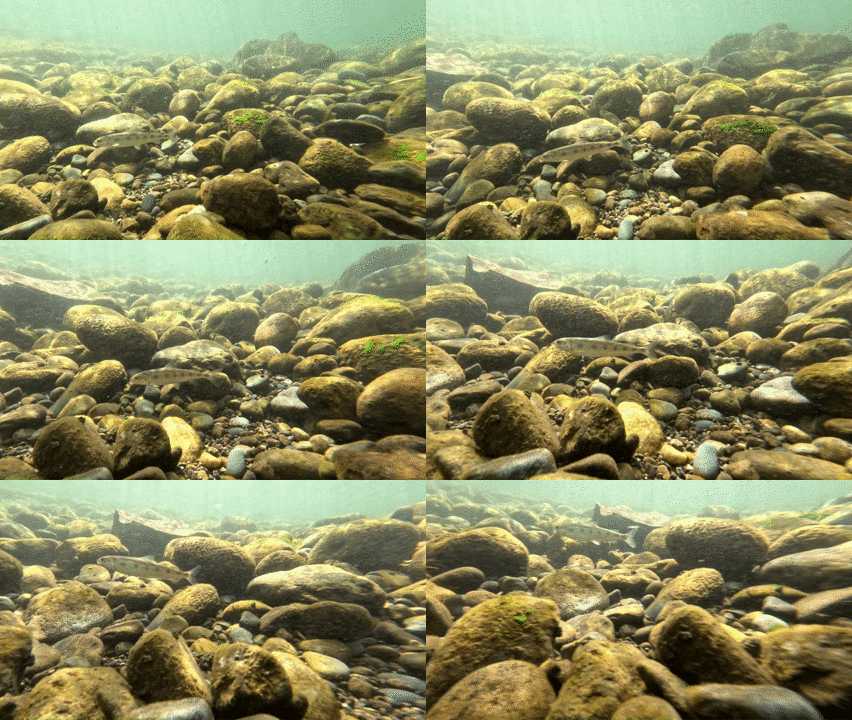
Mountain Whitefish are primarily bottom feeders, so your techniques should reflect this. They have small, downturned mouths, meaning tiny baits and flies are key.
Beginner-Friendly Approach: The Bottom Rig
- Setup: Tie a small swivel to your mainline. To the other end of the swivel, attach a 12-24 inch leader (4-6 lb test).
- Weight: Crimp one or two small split shot sinkers about 6-12 inches above your hook. The goal is to get your bait to the bottom and drift naturally.
- Bait: Thread a single salmon egg, a small piece of worm, or a tiny artificial egg (like a Berkley PowerBait Egg) onto a small hook (size 10-14).
- Cast & Drift: Cast upstream and slightly across the current. Allow your rig to sink and drift naturally along the bottom. Watch your line for any subtle hesitations or twitches – these are often whitefish bites.
- The Hookset: When you feel a bite, lift your rod tip smoothly but firmly. Whitefish often "mouth" the bait before fully taking it.
Advanced Techniques: Fly Fishing
- Nymphing: This is the most effective fly-fishing method.
- Indicator Nymphing: Use a strike indicator set to the depth of the water (usually 1.5-2 times the depth). Tie on a weighted nymph (e.g., a size 12-16 Copper John, Prince Nymph, Hare's Ear) as your point fly, and then trail a smaller nymph (e.g., a size 16-20 zebra midge, small pheasant tail, or egg pattern) off the bend of the first hook using 12-18 inches of tippet. Add split shot above your flies if needed to get to the bottom.
- Tightline Nymphing (Euro Nymphing): For experienced anglers, this method allows for extreme sensitivity. Use a long, light rod and specialized leader, keeping the line tight to your flies. Focus on feeling subtle takes.
- Egg Patterns: During the fall trout spawn, whitefish will gorge on trout eggs. Small, realistic egg patterns (e.g., size 12-16 Glo-Bugs, Otter's Soft Eggs) are incredibly effective when drifted along the bottom.
- Small Spinners/Spoons: In wider rivers or lakes, small inline spinners (size 0-1, e.g., Mepps Aglia, Panther Martin) or tiny spoons (e.g., Kastmaster 1/8 oz) can entice aggressive whitefish. Cast upstream and retrieve slowly, just above the bottom.
Key Tip for All Techniques: Whitefish bites are often incredibly subtle. Any hesitation, tic, or unnatural movement of your line or indicator should be met with a gentle hookset.
Who to Go With (Guides, Groups, or Solo)
Mountain Whitefish fishing is incredibly accessible, making it a great option whether you prefer to go solo, with friends, or hire a professional.
- Solo/DIY: This is a fantastic species for independent anglers. With readily available public access on many rivers and a relatively simple gear setup, you can have a very successful day on your own. It's a great way to explore new waters and hone your river fishing skills.
- Groups/Friends: Whitefish fishing is a social activity. Their abundance often means consistent action, making it perfect for a friendly competition or teaching new anglers. Share techniques and enjoy the beautiful surroundings.
- Guided Trips: While not as common for solely targeting whitefish, many trout guides in Western states are highly knowledgeable about whitefish patterns and will happily put you on them. A guided trip, often ranging from $400-$800 USD for a full day (depending on location and guide's reputation), is an excellent investment for beginners or those wanting to quickly learn the local hot spots, techniques, and nuances of the river. Guides provide all the necessary gear and often offer invaluable insights into river dynamics and conservation. If you're new to a specific river system, even a half-day guide can drastically shorten your learning curve.
Essential Gear Recommendations
You don't need a massive arsenal to catch Mountain Whitefish, but having the right light tackle will significantly enhance your experience.
- Rods:
- Spinning: Ultralight action rod, 5'6" to 6'6" length. Ugly Stik Elite Spinning Rod → Shop on Amazon (Budget) or St. Croix Panfish Series Spinning Rod → Shop on Amazon (Mid-range)
- Fly: 2-4 weight, 7'6" to 9' length. Orvis Encounter Fly Rod Outfit → Shop on Amazon (Budget) or Sage Foundation Fly Rod → Shop on Amazon (Mid-range)
- Reels:
- Spinning: Small, ultralight spinning reel (size 500-1000). Shimano Sienna FG Spinning Reel → Shop on Amazon (Budget) or Pflueger President Spinning Reel → Shop on Amazon (Mid-range)
- Fly: Matching size reel for your rod, ideally with a smooth drag. Redington Zero Fly Reel → Shop on Amazon (Budget) or Lamson Liquid Fly Reel → Shop on Amazon (Mid-range)
- Line:
- Spinning: 4-6 lb monofilament or fluorocarbon main line. Berkley Trilene XL Monofilament → Shop on Amazon (Budget) or Seaguar InvizX Fluorocarbon → Shop on Amazon (Mid-range)
- Fly: Weight-forward floating fly line matching your rod weight. Rio Mainstream Trout Fly Line → Shop on Amazon (Budget) or Scientific Anglers Amplitude Smooth Trout Fly Line → Shop on Amazon (Mid-range)
- Terminal Tackle:
- Hooks: Small, sharp hooks (size 10-16 for bait, 12-20 for flies). Gamakatsu Baitholder Hooks → Shop on Amazon or Tiemco 2488 Nymph Hooks → Shop on Amazon
- Split Shot: Assorted sizes. Water Gremlin Removable Split Shot → Shop on Amazon
- Swivels: Small barrel swivels. Eagle Claw Barrel Swivels → Shop on Amazon
- Leader/Tippet: 4-6 lb fluorocarbon for spinning, 4x-6x fluorocarbon for fly fishing. Rio Powerflex Plus Tippet → Shop on Amazon
- Strike Indicators: Small, sensitive indicators for fly fishing. Thingamabobber Strike Indicators → Shop on Amazon
- Baits/Flies:
- Bait: Salmon eggs (real or artificial), small pieces of nightcrawler. Pautzke Bait Co. Fire Balls → Shop on Amazon
- Flies: Copper Johns, Prince Nymphs, Hare's Ears (size 12-16), Zebra Midges, Pheasant Tails (size 16-20), Glo-Bugs/Egg Patterns (size 12-16). Assorted Nymph Fly Kit → Shop on Amazon
- Waders & Boots: Essential for getting into prime river positions in cold water. Frogg Toggs Canyon II Waders → Shop on Amazon (Budget) or Simms Tributary Waders → Shop on Amazon (Mid-range)
- Essentials: Forceps/Hemostats (for hook removal), small net (rubberized mesh is best for fish health), polarized sunglasses, sunscreen, hat.
Expected Costs (Full Setup vs. Budget Version)
Fishing for Mountain Whitefish can be incredibly affordable, especially if you already have some basic gear.
-
Basic Budget Setup (Spinning):
- Fishing License: ~$20-50 USD (annual non-resident, state-dependent. Resident licenses are typically lower, e.g., Montana resident annual is ~$30). Always check current fees with the relevant state fish and wildlife agency.
- Rod & Reel Combo: ~$50-80 USD
- Line, Hooks, Weights, Bait: ~$30-50 USD
- Basic Waders/Boots (optional but recommended): ~$100-150 USD
- Total Budget Setup: ~$200-330 USD
-
Full Fly Fishing Setup (Mid-Range):
- Fishing License: ~$20-50 USD (annual non-resident, state-dependent)
- Fly Rod & Reel Combo: ~$200-400 USD
- Fly Line, Leader, Tippet: ~$70-100 USD
- Assorted Nymphs/Egg Patterns: ~$50-100 USD
- Quality Waders & Boots: ~$250-500 USD
- Total Full Setup: ~$590-1150 USD
These costs do not include travel, accommodation, or food. A guided trip would be an additional cost, as mentioned above. Remember, many items like waders and vests can be used for various types of fishing, making them a worthwhile long-term investment.
Regulations and Conservation
Mountain Whitefish are generally abundant throughout their range, and most states manage them as a sport fish. However, regulations can vary significantly from state to state and even river to river.
- Key Regulatory Authority: For fishing in the United States, you must always consult the official regulations published by the specific state's fish and wildlife agency. Examples include:
- Montana Fish, Wildlife & Parks (FWP)
- Idaho Department of Fish and Game (IDFG)
- Wyoming Game and Fish Department (WGFD)
- Colorado Parks and Wildlife (CPW)
- Washington Department of Fish and Wildlife (WDFW)
- Oregon Department of Fish and Wildlife (ODFW)
- Common Regulations:
- License: A valid fishing license for the state you are fishing in is always required.
- Bag Limits: Most states have generous bag limits for Mountain Whitefish, often 10-25 fish per day. Some waters may have no limit, while others might have specific size restrictions.
- Gear Restrictions: Pay attention to bait restrictions (e.g., fly fishing only, artificial lures only, no bait) and hook types (e.g., single barbless hooks only) on specific waters, especially those designated as "trophy trout" waters, even if you're targeting whitefish.
- Seasons: While whitefish are often open year-round, specific river sections or spawning areas might have seasonal closures.
Conservation: While not typically a species of conservation concern, responsible angling practices are crucial. Always practice catch-and-release with care for fish you don't intend to keep. Use rubberized nets to protect their slime coat, minimize handling time, and release them gently. Respect private property and pack out all trash. By following regulations and practicing ethical angling, we ensure healthy whitefish populations for generations to come.
Pro Tips and Common Mistakes to Avoid
These insights, honed over decades on the water, will put you ahead of the curve.
- Go Small: Whitefish have tiny mouths. Use the smallest hooks (size 12-16 for bait, 16-20 for flies) and the daintiest presentations. A size 8 hook is often too large.
- Get to the Bottom: Whitefish are bottom feeders. If you're not occasionally ticking the riverbed with your weight or flies, you're not in the strike zone. Don't be afraid to add more split shot.
- Watch for the Subtle Take: Their bites are notoriously light. Any pause, twitch, or slight discoloration of your line should trigger a gentle hookset. Don't wait for a powerful tug.
- Fish the "Soft Water": While they hold in current, whitefish often prefer the slightly slower, softer water adjacent to faster currents, behind boulders, or in the tail-outs of pools.
- Focus on Spawning Areas in Fall: During their fall spawn, they stack up on clean gravel beds. These are whitefish magnets, but be mindful not to disturb spawning trout if present.
- Keep Them Wet: If you plan to release, keep whitefish in the water as much as possible. Their scales are delicate.
- Don't Overlook Them: The biggest mistake is dismissing Mountain Whitefish as "trash fish." They are strong fighters and excellent table fare, offering consistent action when other species are finicky.
Conclusion
The Mountain Whitefish, with its silver flash and surprising fight, is a truly unsung hero of Western waters. From the subtle art of nymphing in a frigid river to the simple pleasure of a salmon egg on an ultralight setup, pursuing these fish offers endless rewards. They provide consistent action, a challenging bite, and a delicious meal, all set against some of the most stunning backdrops North America has to offer. So next time you're planning a trip to the mountains, don't just chase trout – dedicate some time to these feisty bottom dwellers. You might just find your new favorite species.
Tight lines, and I'll see you on the water! Next time, we'll explore the thrill of chasing trophy Smallmouth Bass in the summer heat.
As an Amazon Associate I earn from qualifying purchases at no extra cost to you. Links above are affiliate search links — prices may vary. Generated 2026-09-12