Hunt Dusky Grouse Like a Pro: Complete Hunting Guide
Introduction
The crisp mountain air bites at your cheeks, carrying the scent of pine and damp earth as you traverse a steep, timbered slope. Sunlight filters through the dense canopy of conifers, dappling the forest floor in a mosaic of light and shadow. Your heart pounds a rhythm against your ribs, not just from the climb, but from the anticipation. Suddenly, a thunderous WHIRRRR! explodes from the undergrowth just feet away. A dark, plump bird rockets skyward, wings beating furiously as it weaves through the trees. Instinct takes over – the shotgun mounts, a quick swing, and BAM! The silence that follows is deafening, broken only by the rustle of leaves as your quarry tumbles to the ground. That, my friends, is the thrill of hunting Dusky Grouse.
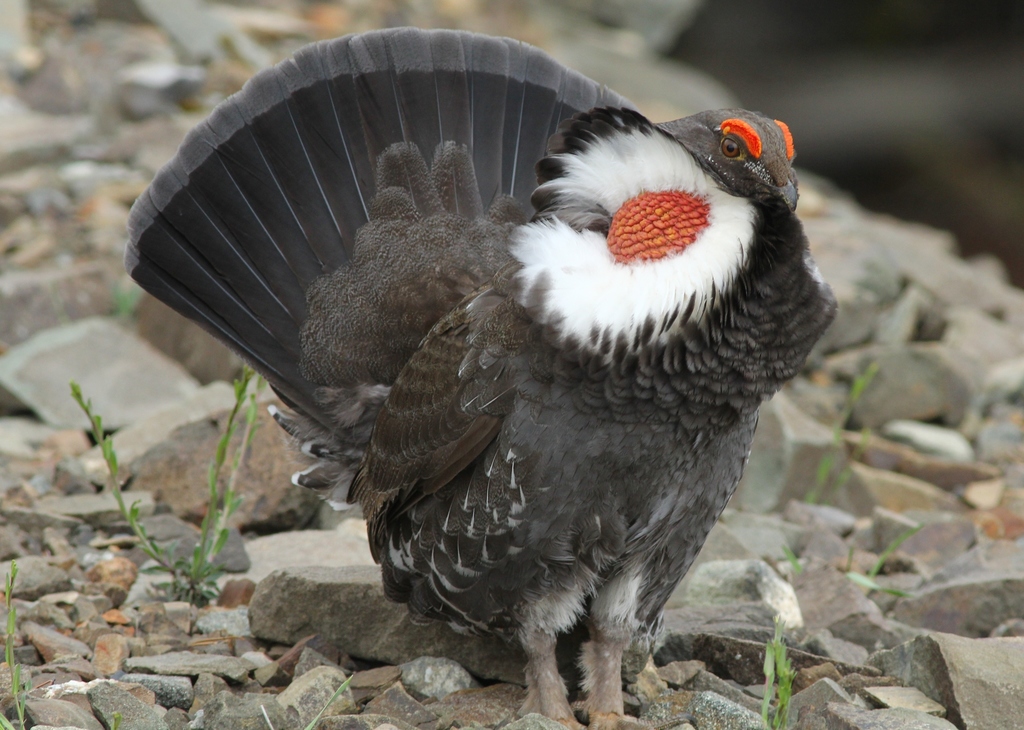
Often overshadowed by their flashier pheasant and quail cousins, the Dusky Grouse (formerly known as Blue Grouse) offers an incredibly rewarding challenge for the upland hunter. Found high in the conifer forests of the Western United States and Canada, these birds are masters of camouflage and mountain living. Pursuing them isn't just about the shot; it's about immersing yourself in some of North America's most breathtaking landscapes, testing your woodsmanship, and earning a truly wild bird for your table. If you're ready to trade open fields for rugged mountains, the Dusky Grouse hunt is calling your name.
When to Go (Best Seasons and Times)
Dusky Grouse seasons typically open in late summer, often around late August or early September, and run through October or even into November in some states. The exact dates vary significantly by state and province, so always consult the relevant wildlife agency's regulations.
- Early Season (Late August - Mid-September): This is often the most popular time. Birds are frequently found higher up on the mountain slopes, near ridge lines, and in mature conifer forests, especially those with an understory of huckleberries or other berries they feed on. Young birds are less wary, and the weather is generally milder, though afternoon thunderstorms can be common in the mountains.
- Mid-Season (Mid-September - Mid-October): As temperatures drop and big game seasons open, grouse may begin to move to slightly lower elevations or seek out denser cover. They'll still be in conifer forests, but might be found closer to water sources or in areas with thicker undergrowth. Fall colors are often at their peak, making for a beautiful hunting experience.
- Late Season (Late October - November): With colder weather and potential snow, Dusky Grouse will often descend to lower elevations, but still within their preferred conifer habitat. They become more reliant on conifer needles for food and will often be found roosting in trees. They also tend to "buddy up" more, so if you find one, there might be others nearby.
Best Times of Day: Like many game birds, Dusky Grouse are most active during the cooler parts of the day. * First Light: The first few hours after sunrise are prime, as birds move from roosting areas to feeding grounds. * Late Afternoon: The hours before sunset also offer excellent opportunities as birds feed before heading to roost. * Mid-day: While less active, grouse can still be found throughout the day, especially on overcast days or in heavily shaded timber. They may be dusting or loafing in thick cover.
Weather Patterns: * Cool, Overcast Days: Often ideal, as birds may remain active longer. * Post-Rain: After a light rain, birds can be more active, and their scent may be easier for dogs to pick up. * Avoid Hot, Sunny Afternoons: Birds will often seek deep shade and become less active.
Regional Tips: In the Rocky Mountain states (Colorado, Montana, Idaho, Wyoming, Utah), focus on elevations between 6,000 and 10,000 feet, especially in areas with Douglas fir, ponderosa pine, and spruce forests. In the Pacific Northwest (Oregon, Washington), look for them in similar conifer forests, often at slightly lower elevations depending on proximity to the coast.
Where to Hunt (Top Locations)
Dusky Grouse are truly a public land hunter's dream, thriving in the vast national forests and wilderness areas of the Western US and Canada.
Here are some top regions and states to consider, emphasizing public land options:
- Colorado: The Rocky Mountains of Colorado are prime Dusky Grouse country. Look to the extensive public lands within the White River National Forest, Gunnison National Forest, and San Juan National Forest. Areas around popular ski towns often have excellent grouse habitat just outside resort boundaries. Access is often via established hiking trails, logging roads, or forest service roads.
- Montana: Big Sky Country offers expansive opportunities. The Lolo National Forest, Flathead National Forest, and Gallatin National Forest are excellent choices. Concentrate on the western half of the state where the mountains are more pronounced.
- Idaho: Idaho's rugged terrain is perfect for Dusky Grouse. The Boise National Forest, Payette National Forest, and Clearwater National Forest are vast and hold good populations. Look for timbered slopes with water nearby.
- Wyoming: While known for big game, Wyoming's mountains also offer great grouse hunting. The Shoshone National Forest (especially around the Absaroka Range) and the Bridger-Teton National Forest are excellent public land options.
- Oregon & Washington: The Cascade Range in both states provides fantastic Dusky Grouse habitat. In Oregon, the Deschutes National Forest and Mount Hood National Forest are productive. In Washington, explore the Okanogan-Wenatchee National Forest and Gifford Pinchot National Forest.
- Utah: The Wasatch Range and other mountain systems in Utah offer great hunting. The Uinta-Wasatch-Cache National Forest and Dixie National Forest are excellent places to start, particularly at higher elevations.
For international opportunities, the Canadian Rockies across British Columbia and Alberta offer similar mountainous conifer habitat and excellent hunting for Dusky Grouse, often as part of a multi-species upland hunt.
Beginner-Friendly Options: Look for areas with established forest service roads or hiking trails that cut through suitable habitat. These provide easier access and navigation compared to bushwhacking through dense, untracked timber. Always carry a reliable map and GPS, and be aware of your surroundings.
How to Hunt (Proven Techniques)
Dusky Grouse hunting is a game of patience, stealth, and quick reflexes. Here's a step-by-step approach for beginners, along with advanced tips:
For Beginners:
- Scouting and Habitat Identification:
- Before you even step foot in the woods, use maps (digital or paper) to identify areas with mature conifer forests, especially those near ridge lines, saddles, or clearings. Look for areas with varied undergrowth like huckleberries, serviceberries, or mountain ash.
- Grouse need water, so target areas near springs, seeps, or small creeks.
- Look for "transition zones" where different forest types meet, or where timber meets an open slope.
- Still Hunting (Slow and Deliberate):
- Move slowly through the woods. Dusky Grouse rely on camouflage and often won't flush until you're nearly on top of them.
- Take a few steps, then pause for 30-60 seconds, scanning ahead and to the sides. Look for subtle movements, shapes that don't quite fit, or the tell-tale dark silhouette of a grouse perched on a branch.
- Listen for any sounds: rustling leaves, soft clucking, or the distinct WHIRRRR of a flush.
- Flushing and Shooting:
- When a grouse flushes, it will often burst out with incredible speed and power. Your reaction time needs to be immediate.
- Mount your shotgun smoothly, swing through the bird, and pull the trigger.
- Many grouse will fly a short distance and "tree" (perch in a nearby tree). If you see one land, approach cautiously. Sometimes they'll sit tight, offering a second shot, but be aware of regulations regarding shooting treed birds (some states restrict this).
- Retrieval:
- Mark the spot where the bird went down mentally or with a physical marker.
- Proceed directly to the spot. Dusky Grouse are dark and can be hard to find in dense cover.
- A good bird dog is invaluable for retrieval, especially in thick timber.
Advanced Tips:
- Utilize a Bird Dog: A well-trained pointing or flushing dog will dramatically increase your success rate and minimize lost birds. They can locate birds you'd walk past and retrieve them from dense cover.
- Hunt the Edges and Openings: While grouse live in dense timber, they often feed along the edges of clearings, logging roads, or natural openings where sunlight promotes berry growth. These areas also offer better shooting lanes.
- Look Up: Dusky Grouse are notorious for flushing into trees and perching motionless, blending perfectly with the bark. Scan tree branches carefully after a flush, or even before one.
- Patterning Birds: Over time, you'll start to notice patterns. For example, which aspect of a slope they prefer (north-facing for shade, south-facing for warmth), what types of food sources they're keying in on, and their preferred roosting sites.
- Calling (Limited Use): While not as common as for turkeys, some hunters use soft "hoot" or "cluck" calls to try and locate or draw in a curious grouse, especially during the breeding season (less effective in fall).
Who to Go With (Guides, Groups, or Solo)
The decision of who to hunt with often comes down to personal preference, experience, and budget.
- Solo Hunting: This is a popular and rewarding way to hunt Dusky Grouse. It offers solitude and a deep connection with nature. However, it requires a higher degree of self-reliance, strong navigation skills, and a good understanding of mountain safety. Always let someone know your plans and expected return time.
- Hunting with a Buddy or Small Group: This is an excellent option, especially for beginners.
- Safety: There's safety in numbers, particularly in rugged mountain terrain.
- Effectiveness: Multiple hunters can work an area more thoroughly, potentially flushing more birds. One hunter can push cover while another walks shooting lanes.
- Camaraderie: Sharing the experience with friends adds to the enjoyment.
- Hunting with a Dog: If you have a well-trained bird dog (pointer, setter, versatile breed), they are arguably the best companion for grouse hunting. They'll find birds you'd never see, hold points, and retrieve downed game, significantly increasing your success and minimizing lost birds.
- Hiring a Guide: While less common for dedicated Dusky Grouse hunts, some upland bird outfitters in Western states or Canadian provinces offer multi-species upland hunts that include grouse. This can be a great option for:
- Beginners: A guide can teach you techniques, identify prime habitat, and ensure a safe, productive hunt.
- Hunters unfamiliar with the terrain: Guides know the local areas intimately and can put you on birds quickly.
- Combination Hunts: If you're also pursuing big game or other upland species, a guide can help maximize your time.
- Cost Context: Expect a guided upland hunt to range from $500 - $1000+ per day, not including licenses, tags, or gratuities. This is a significant investment but can provide an unparalleled experience.
Essential Gear Recommendations
Having the right gear makes your Dusky Grouse hunt safer, more comfortable, and more successful.
Must-Have Gear:
- Shotgun: A lightweight 12 or 20 gauge shotgun is ideal. Over/under, side-by-side, or pump-action are all suitable. An open choke (improved cylinder or skeet) is best for close-flushing birds in thick cover.
- Benelli Montefeltro 20 Gauge → Shop on Amazon
- Remington 870 Wingmaster 20 Gauge → Shop on Amazon
- Ammunition: Upland bird loads with #6 or #7.5 shot are perfect for Dusky Grouse. Carry plenty, as quick follow-up shots can be common.
- Hunting Vest or Game Bag: Essential for carrying your birds, extra shells, water, and other small items. Look for one with good ventilation and comfortable straps.
- Filson Mesh Game Bag Vest → Shop on Amazon
- Sturdy Hiking Boots: You'll be covering rugged, often steep terrain. Waterproof, ankle-supporting boots with good traction are critical.
- Salomon Quest 4D GTX Hiking Boots → Shop on Amazon
- Layered Clothing: Mountain weather can change rapidly. Wear moisture-wicking base layers, insulating mid-layers, and a waterproof/windproof outer shell.
- Navigation Tools:
- GPS Device or GPS-enabled Phone App: Crucial for staying found in vast public lands. Download offline maps.
- Paper Map and Compass: Always carry a backup.
- Water and Snacks: Hydration is key, especially at altitude. Carry more water than you think you'll need.
- First-Aid Kit: A compact kit for minor injuries, blisters, and emergencies.
- Hunter Orange: Check state regulations; many require a minimum amount of hunter orange during big game seasons when hunting upland birds.
- Knife: For field dressing or general utility.
Budget-Friendly Alternatives:
- Used Shotgun: A reliable used pump-action or semi-auto shotgun can be found for a fraction of the cost of new.
- Basic Hunting Vest: Decathlon or other outdoor retailers offer functional vests without premium brand prices.
- Good Hiking Shoes: While dedicated boots are best, sturdy trail running shoes with good grip can suffice for less extreme terrain.
- Phone GPS: Use a reliable app like Gaia GPS or OnX Hunt (with a subscription) on your smartphone as your primary navigation, but always have a power bank and a paper map backup.
Expected Costs (Full Setup vs. Budget Version)
Hunting Dusky Grouse can be done on a range of budgets. Here's a realistic breakdown:
- Licenses & Tags:
- Resident Small Game License: Typically $20 - $50 USD per year (e.g., Colorado small game license is around $30).
- Non-Resident Small Game License: Significantly more, often $80 - $150+ USD per year (e.g., Colorado non-resident small game is around $90).
- Upland Bird Stamp: Some states require an additional stamp, usually $10 - $20 USD.
- Always check current fees with the specific state fish and wildlife agency you plan to hunt in, as these can change annually.
- Gear (Budget Version - $300 - $600 USD):
- Used Shotgun: $200 - $400
- Basic Hunting Vest/Game Bag: $30 - $60
- Good Hiking Shoes: $50 - $100
- Ammunition (2-3 boxes): $30 - $50
- Basic First-Aid, Map, Water Bottle: $20 - $40
- Gear (Full Setup - $1,000 - $2,500+ USD):
- New Quality Shotgun: $700 - $2,000+
- Premium Hunting Vest/Pack: $100 - $300
- High-End Waterproof Hiking Boots: $200 - $400
- Layered Technical Clothing: $200 - $500
- GPS Device (Garmin inReach/Alpha 200i): $400 - $800
- Ammunition: $50+
- Quality First-Aid, Water Filter, Other Accessories: $100+
- Travel Costs:
- Fuel: Varies greatly depending on distance.
- Lodging: Camping on public land is often free or very low cost ($10-$30/night). Hotels/motels can range from $80-$200+ per night.
- Food: Budget for groceries or dining out.
Remember, many gear items are one-time purchases that will last for years, making the initial investment worthwhile for many seasons of hunting.
Regulations and Conservation
Understanding and adhering to regulations is paramount for ethical and sustainable hunting. Dusky Grouse populations are generally stable across their range, but responsible hunting practices ensure their continued abundance.
- Regulatory Authority: For hunting Dusky Grouse in the United States, you must consult the State Fish and Wildlife Agency of the state you plan to hunt in. Examples include:
- Colorado Parks and Wildlife (CPW)
- Montana Fish, Wildlife & Parks (FWP)
- Idaho Department of Fish and Game (IDFG)
- Wyoming Game and Fish Department (WGFD)
- Oregon Department of Fish and Wildlife (ODFW)
- Washington Department of Fish and Wildlife (WDFW)
- Utah Division of Wildlife Resources (UDWR)
- Key Regulations to Check:
- Season Dates: When the season opens and closes.
- Bag Limits: How many birds you can harvest per day (daily bag limit) and how many you can possess (possession limit). These are typically low for grouse (e.g., 2-4 birds daily).
- Legal Methods of Take: Generally, shotguns are the primary method. Always check for restrictions on shooting treed birds or specific ammunition types.
- Hunter Orange Requirements: Many states require hunter orange during big game seasons when upland hunting.
- License and Stamp Requirements: Ensure you have all necessary licenses and any required upland bird stamps.
- Conservation: Dusky Grouse are classified as a game species, and their populations are managed through regulated hunting seasons, bag limits, and habitat conservation efforts by state agencies. Habitat loss and fragmentation, particularly from development and severe wildfires, are potential concerns, but overall, the species is not considered endangered or threatened. Hunters play a vital role in conservation by funding these efforts through license and tag purchases.
Important: Never fabricate specific regulation details. Always advise readers to check current regulations with the appropriate state fish and wildlife agency before going out. Regulations can change annually and vary by management unit or region within a state.
Pro Tips and Common Mistakes to Avoid
Pro Tips:
- Hunt the "Edges": Focus your efforts where different habitat types meet – where dense timber meets an aspen grove, a logging road, a clear-cut, or a creek bottom. These transition zones often hold birds.
- Look Up, Not Just Down: Dusky Grouse will often flush vertically into a tree and perch motionless. After a flush, scan the branches carefully before giving up on finding the bird.
- Slow and Steady Wins the Race: Resist the urge to rush. Move at a snail's pace, pausing frequently to scan and listen. Most flushes happen when you're moving too fast.
- Listen for the "Whirring": The explosive flush of a Dusky Grouse is loud and distinctive. Train your ears to recognize it and react instantly.
- Carry Plenty of Water: For yourself and your dog if you have one. Mountain hunting is physically demanding, and dehydration can set in quickly at altitude.
- Dress for Mountain Weather: Conditions can change from sunny and warm to hail or snow in minutes. Layers are your best friend.
- Mark Your Birds: When a bird goes down, immediately mark the spot with a mental landmark, a piece of flagging tape, or by dropping your hat. Dark birds in dark timber are incredibly hard to find.
Common Mistakes to Avoid:
- Moving Too Fast: The most common mistake. You'll walk right past birds that are holding tight, relying on their camouflage.
- Not Looking Up: Many hunters only focus on the ground, missing treed birds or the flight path of flushed grouse.
- Underestimating Terrain Difficulty: Mountain hunting is physically demanding. Be prepared for steep climbs, uneven footing, and dense brush. Don't overextend yourself.
- Forgetting Navigation Tools: Getting lost in vast national forests is a serious risk. Always carry a reliable GPS and a backup map/compass.
- Not Checking Regulations: Assuming regulations are the same as last year or another state can lead to violations. Always verify season dates, bag limits, and specific rules for your hunting area.
- Leaving Downed Birds Unretrieved: It’s unethical and a waste of a wild resource. Do everything in your power to find every bird you shoot. This is where a good dog shines.
- Wearing Cotton: Cotton holds moisture, making you cold and uncomfortable in wet or chilly mountain conditions. Opt for synthetic or wool base layers.
Conclusion
Hunting Dusky Grouse is more than just a pursuit of game; it's an immersive mountain experience that challenges your senses, hones your woodsmanship, and connects you deeply with the rugged beauty of the high country. From the heart-stopping flush in a fragrant conifer forest to the satisfying weight of a hard-earned bird in your game bag, every moment is a testament to the wild. It’s a hunt that demands patience, keen observation, and a willingness to explore, rewarding you not just with delicious table fare but with unforgettable memories.
So, gear up, hit the trails, and answer the call of the mountains. The Dusky Grouse awaits, ready to test your mettle. Next time, we'll dive into the art of calling in a wary Merriam's turkey – stay tuned!
As an Amazon Associate I earn from qualifying purchases at no extra cost to you. Links above are affiliate search links — prices may vary. Generated 2026-10-17