
Hunt Mallard Like a Pro: Complete Hunting Guide
Introduction
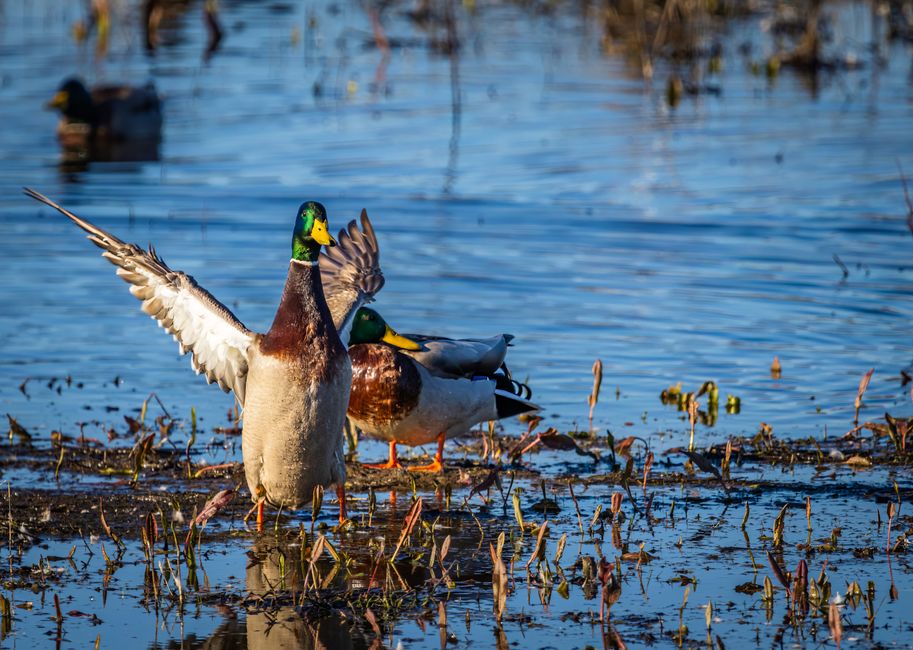
The pre-dawn chill bites at your exposed skin, but the anticipation warms you from within. You’re hunkered deep in a blind, surrounded by the skeletal silhouettes of flooded timber, the air thick with the smell of damp earth and anticipation. Suddenly, a distant, raspy "quack-quack-quack" breaks the silence. Your heart leaps. Then, a rush of wings overhead, a frantic whistle of air as a flock of ducks banks hard, descending through the canopy like feathered missiles. They’re circling, committing to your spread, their iridescent green heads and bright orange feet unmistakable even in the gloom. You raise your shotgun, the moment of truth just seconds away. This, my friends, is the magic of Mallard hunting.
Mallards aren't just any duck; they are the duck. Iconic, widespread, and famously intelligent, they represent the pinnacle of waterfowl hunting for many. Their vibrant plumage, distinct calls, and challenging nature make them an incredibly rewarding pursuit. From the vast grain fields of the prairies to the flooded timber of the South, Mallards offer an unparalleled hunting experience throughout the fall and winter months across North America. It's a sport that tests your patience, your knowledge of the birds, and your ability to blend seamlessly with nature.
When to Go (Best Seasons and Times)
Mallard hunting is a seasonal pursuit, largely dictated by their annual migrations and local breeding cycles. In North America, the general season runs from early September in northern states and provinces, continuing through late January in the southern wintering grounds.
- Early Season (September-October): This is when local birds are abundant before the major migrations begin. Hunting often takes place in smaller potholes, marshes, and agricultural fields where birds are feeding heavily. The weather is typically milder, and the birds haven't been pressured as much, making for potentially easier hunting.
- Mid-Season (November-Early December): This is often considered prime time. Cold fronts push vast numbers of Mallards south from their breeding grounds in Canada and the northern US. Look for birds concentrating on larger bodies of water, rivers, and grain fields. Weather patterns, especially significant cold snaps, can trigger huge movements.
- Late Season (Late December-January): The toughest but often most rewarding hunting. Birds are wary, having been hunted for months. They’ve settled into their wintering patterns, often concentrating in specific, hard-to-reach refuges or private lands. Focus on major wintering areas like the Mississippi Flyway's flooded timber or coastal estuaries.
Best Times of Day: Mallards are most active at dawn and dusk. The first two hours after legal shooting light and the last two hours before dark are typically the most productive. This is when birds are flying from roosting areas to feeding grounds and vice-versa. Mid-day hunting can be effective on overcast, windy, or rainy days when birds might fly more frequently.
Weather Patterns: * Cold Fronts: A dropping barometer and incoming cold weather often push new birds into an area and make existing birds move more. * Overcast/Windy Days: Low light conditions make birds more comfortable flying, and wind helps them maneuver and can make decoys look more lifelike. Heavy winds can also push birds into more sheltered areas where hunters might have an advantage. * Rain/Snow: Light rain or snow can be excellent, as it provides cover and can make birds less wary. Heavy downpours, however, usually ground birds.
Where to hunt (Top Locations)
Mallards are adaptable, found across a vast range of habitats. In the US, prime Mallard hunting opportunities exist across all four major flyways, with a strong emphasis on public land access.
- Arkansas (Mississippi Flyway): Famous for its flooded timber hunting. The "Duck Capital of the World" offers numerous public lands like Bayou Meto Wildlife Management Area (WMA) and parts of the White River National Wildlife Refuge. Expect intense competition but incredible opportunities.
- North Dakota (Central Flyway): The "Duck Factory" of North America. Hunters find success in countless small potholes, prairie marshes, and agricultural fields. Audubon National Wildlife Refuge and various State Wildlife Management Areas offer public access, often requiring walk-in hunting.
- California (Pacific Flyway): The Central Valley is a major wintering ground. Sacramento National Wildlife Refuge Complex and Mendota Wildlife Area are popular public options, often managed with lottery systems for blinds.
- Maryland (Atlantic Flyway): The Eastern Shore offers diverse habitats, from tidal marshes to agricultural fields. Deal Island Wildlife Management Area and Blackwater National Wildlife Refuge (with specific hunting areas) provide public access.
- Missouri (Mississippi Flyway): Similar to Arkansas, Missouri has excellent flooded timber and managed wetland hunting. Ten Mile Pond Conservation Area and Duck Creek Conservation Area are highly regarded public spots.
- Texas (Central & Mississippi Flyways): Coastal marshes and rice fields draw huge numbers of wintering Mallards. Public hunting is available on Justin Hurst WMA and various National Wildlife Refuges along the coast.
While the US offers incredible Mallard hunting, international opportunities are also robust. European countries like the UK, France, and Germany have strong Mallard populations and hunting traditions, often on private estates or managed wetlands. Asian countries also offer opportunities, particularly in regions along migratory routes. Always research local regulations and reputable outfitters if considering an international trip.
How to hunt (Proven Techniques)
Hunting Mallards effectively requires a blend of scouting, setup, and execution. Here’s a step-by-step guide for beginners, plus some advanced tips.
Beginner's Approach:
- Scouting is Paramount: Before you even think about setting decoys, find where the birds want to be. Drive backroads, use binoculars, and observe flight patterns. Look for areas where Mallards are feeding, resting, or flying consistently. This is 90% of the battle.
- Choose Your Location & Concealment:
- Water Hunting: Look for shallow water with good cover (reeds, timber, brush) where you can hide effectively.
- Field Hunting: Find a field where birds are feeding, often near a water source. You'll need a layout blind or natural ditch/fence line for concealment.
- Concealment is Key: Mallards have incredible eyesight. Use a well-built blind, natural cover, or a layout blind. Break up your outline and ensure no shiny objects are exposed.
- Basic Decoy Spreads:
- Start with 1-2 dozen Mallard decoys (a mix of drakes and hens).
- J-Hook or U-Shape: Place most decoys upwind of your blind, leaving an open "landing zone" directly in front of you. The hook/U should point towards your blind. This guides birds into shooting range.
- Motion Decoys (Optional but Recommended): A spinning-wing decoy (spinner) or a jerk cord can add lifelike movement and significantly enhance your spread, especially on calm days.
- Calling Basics:
- Start with a simple greeting call (3-5 short, sharp quacks) to get their attention.
- If they respond or turn towards your spread, use a comeback call (longer, pleading quacks).
- As they commit and cup their wings, switch to a soft feed call (a series of rapid, low-volume "tik-a-tik" sounds) to reassure them.
- Don't overcall! Let the birds work.
- The Shot:
- Wait until birds are within effective range (typically 25-40 yards) with their wings set, feet down, looking to land in your kill hole.
- Pick a single bird, swing through it, and fire. Follow through with your swing.
- Always be aware of your shooting lanes and hunting partners. Safety first!
- Retrieve: A good retrieving dog is invaluable. If hunting without one, mark downed birds carefully and retrieve them quickly.
Advanced Tips:
- Reading the Wind and Sun: Always set your decoys so that birds will land into the wind, which is their natural way of landing. Position your blind with the sun at your back, if possible, to put hunters in the shadows and make it harder for birds to spot you.
- Vary Your Spreads: Don't just use one setup. In timber, a small, tight spread might work. In open water, a larger, more spread-out "loafing" pattern might be better. Add variety with different species (pintails, wigeon) if legal and appropriate for your area.
- Aggressive Calling: When birds are high or flying past, a loud, aggressive "hail call" (long, drawn-out quacks) can sometimes turn them. Practice different cadences and volumes.
- Field Decoying: For field hunting, use full-body Mallard decoys or shells, often in larger numbers (3-5 dozen or more). Combine them with goose decoys if geese are in the area. Layout blinds are essential.
- Water Depth: Mallards prefer shallow water for feeding and resting. Set your decoys in water that's 6-18 inches deep.
Who to Go With (Guides, Groups, or Solo)
Mallard hunting offers flexibility, from solitary pursuits to guided expeditions.
- Solo Hunting: Absolutely doable, especially if you have access to good public land and are self-sufficient. It requires more gear, more setup work, and you'll be responsible for all retrieves. It's a great way to experience the solitude of nature. Best for experienced hunters.
- Hunting in Groups (2-4 people): This is the most common and often recommended approach, especially for beginners.
- Pros: Shared gear, costs, and workload (setting decoys, blind building). Enhanced safety. More eyes for spotting birds. Often a more enjoyable social experience.
- Cons: Requires coordination and compromise on hunting styles.
- Guided Hunts: Highly recommended for beginners or those looking for a premium experience.
- Pros: Access to private, often prime hunting land. Expert knowledge of local bird movements and calling techniques. All gear (blinds, decoys) is usually provided. High success rates are common. A fantastic learning experience.
- Cons: Cost is significantly higher.
- Where to find guides: Look for reputable outfitters in known Mallard hotspots like Arkansas (flooded timber), North Dakota (prairie potholes), or California (Central Valley). A typical guided day hunt can range from $300 to $800+ per person, depending on the location, outfitter, and what's included (lodging, meals). Always check references and what's covered before booking.
Essential Gear Recommendations
Having the right gear makes a huge difference in comfort, safety, and success.
- Must-Have Gear:
- Shotgun: 12-gauge semi-automatic or pump-action is ideal. Waterfowl Shotgun → Shop on Amazon
- Ammunition: Non-toxic steel shot is legally required for waterfowl. Use 3-inch shells, shot sizes BB, 2, or 4 for Mallards. Steel Shot Waterfowl Ammo → Shop on Amazon
- Waders: Insulated chest waders are essential for cold water. Insulated Chest Waders → Shop on Amazon
- Camouflage: Waterfowl-specific patterns (marsh, timber, field) for jacket, pants, gloves, and face mask. Layering is key for warmth. Waterfowl Camo Jacket → Shop on Amazon
- Decoys: 1-2 dozen Mallard decoys (mix of drakes and hens). Mallard Decoy Pack → Shop on Amazon
- Duck Call: A basic Mallard call. Practice extensively before hunting. Beginner Duck Call → Shop on Amazon
- Headlamp: With a red light option to preserve night vision. Waterproof Headlamp → Shop on Amazon
- Dog (Optional but Highly Recommended): A trained retriever saves crippled birds and makes hunting more efficient. Dog Training Whistle → Shop on Amazon
- Life Vest: If hunting from a boat or near deep water. USCG Approved Life Vest → Shop on Amazon
- Blind Material: Netting, natural vegetation, or a portable blind.
- Thermos: Hot coffee or soup on a cold morning is a game-changer.
- Budget-Friendly Alternatives:
- Used Shotgun: Check local gun shops for reliable, pre-owned 12-gauges.
- Borrow Gear: Ask friends to lend waders or decoys for your first few hunts.
- Fewer Decoys: Start with a half-dozen decoys and add more as you go.
- DIY Blind: Utilize natural cover (cat-tails, brush, downed trees) instead of buying a pre-made blind.
- Hand-Me-Down Camo: Any dark, muted earth tones can work in a pinch, though waterfowl-specific patterns are better.
Expected Costs (Full Setup vs. Budget Version)
Hunting Mallards involves several costs, from licensing to gear. Here's a realistic breakdown in USD.
-
Licensing & Stamps (Annual):
- Federal Migratory Bird Hunting and Conservation Stamp (Federal Duck Stamp): $25
- State Hunting License: $20 - $75 (resident, varies by state)
- State Waterfowl Stamp/Permit: $5 - $25 (varies by state)
- Harvest Information Program (HIP) Registration: Free - $5 (required in most states)
- Total Annual License/Stamp Costs: ~$50 - $130
- Always check your specific state's fish and wildlife agency website for current fees and requirements before purchasing.
-
Gear Costs:
- Full Setup:
- Shotgun (new, mid-range): $500 - $1,200
- Ammunition (5 boxes): $100 - $150
- Waders (insulated): $150 - $400
- Camouflage (jacket, pants, gloves, facemask): $200 - $600
- Decoys (2 dozen, quality): $150 - $300
- Duck Call: $50 - $150
- Blind (portable/layout): $150 - $400
- Other essentials (headlamp, thermos, etc.): $50 - $100
- Total Full Setup: ~$1,350 - $3,300+
- Budget Version:
- Shotgun (used, reliable): $200 - $400
- Ammunition (3 boxes): $60 - $90
- Waders (entry-level): $80 - $150
- Camouflage (basic layers): $80 - $150
- Decoys (1 dozen, basic): $70 - $120
- Duck Call (beginner): $20 - $40
- Blind (DIY using natural cover): $0 - $50
- Other essentials (borrowed/basic): $20 - $50
- Total Budget Setup: ~$530 - $1,050+
- Full Setup:
-
Guided Hunt (per person, per day): $300 - $800+ (Does not include licenses, ammunition, or gratuity).
Regulations and Conservation
Mallard hunting is strictly regulated to ensure sustainable populations. It is imperative that every hunter understands and adheres to all laws.
- Regulatory Authorities: In the United States, waterfowl hunting regulations are a joint effort between the U.S. Fish and Wildlife Service (USFWS) at the federal level and individual State Fish and Wildlife Agencies (e.g., Arkansas Game and Fish Commission, California Department of Fish and Wildlife).
- Key Regulations to Check Annually:
- Season Dates: Opening and closing dates vary by state and sometimes by zone within a state.
- Bag Limits: The maximum number of birds you can harvest per day (e.g., 6 ducks, with specific limits on certain species like Mallards, often 4 total Mallards with only 2 being hens).
- Possession Limits: The maximum number of birds you can have in your possession at home or in transit, typically three times the daily bag limit.
- Shooting Hours: Legal hunting hours, usually from 30 minutes before sunrise to sunset.
- Non-Toxic Shot: Federal law requires the use of non-toxic shot (steel, bismuth, tungsten-iron, etc.) for all waterfowl hunting. Lead shot is strictly prohibited.
- Method of Take: Restrictions on specific firearms, magazine capacity (typically 3 shells total in the gun), and other hunting methods.
- Baiting: It is illegal to hunt waterfowl over baited areas.
- Always Check Current Regulations: Regulations change annually. Before every season, visit your state's official Fish and Wildlife agency website and review their current waterfowl hunting guide. Ignorance of the law is not an excuse.
- Conservation Status: Mallards are generally considered a healthy and abundant species across their range. Hunting license and duck stamp sales directly fund vital wetland conservation efforts and research, benefiting not just Mallards but countless other wildlife species. By participating in regulated hunting, you are actively contributing to conservation.
Pro Tips and Common Mistakes to Avoid
Mastering Mallard hunting comes with experience, but here are some pointers to shorten the learning curve:
Pro Tips:
- Scout Relentlessly: This cannot be stressed enough. Find where the birds want to be. Your setup and calling will be far more effective if you're in the right spot.
- Be a Chameleon: Mallards have incredible eyesight. Hide completely. Wear a face mask. Don't move when birds are approaching. If they see you, they're gone.
- Learn Basic Calls First: Master the greeting call, comeback call, and feed call. Don't try to be a championship caller until you've perfected the fundamentals.
- Watch the Wind: Birds land and take off into the wind. Always set your decoys and position your blind to take advantage of this.
- Don't Overcall: Less is often more. Once birds are committed, soft clucks and feed calls are usually enough. Let the decoys do the work.
- Use Motion Wisely: Spinning wing decoys are great, but sometimes less is more. On sunny days, the flash can be unnatural. Consider jerk strings or simple wobblers for more subtle motion.
- Bring a Dog: A well-trained retriever is not just a companion; it's a vital tool for recovering downed birds, especially in thick cover or cold water, preventing waste.
Common Mistakes to Avoid:
- Poor Concealment: The number one reason hunters get busted. Even a small patch of exposed skin or a shiny shotgun barrel can ruin a hunt.
- Calling Too Much or Too Poorly: Bad calling scares birds. Too much calling makes them suspicious. Practice, practice, practice!
- Not Scouting: Setting up in a "pretty" spot where no birds are flying is a waste of time. Hunt where the birds are.
- Shooting Too Far: "Sky-busting" wounds birds and rarely results in a clean retrieve. Wait for birds to commit and be within effective range (under 40 yards).
- Ignoring Safety Rules: Always follow gun safety rules. Know where your hunting partners are. Wear a life vest if boating.
- Forgetting Non-Toxic Shot: Using lead shot for waterfowl is illegal and environmentally harmful. Double-check your ammo before you leave home.
- Giving Up Too Early: Mallards can fly in waves. Sometimes the best action is later in the morning or just before dark.
Conclusion
The pursuit of the magnificent Mallard is more than just hunting; it's an immersion into the wild, a test of skill, and a deep connection with nature's rhythms. From the exhilarating rush of wings overhead to the satisfying thud of a retrieved bird, every moment is etched into memory. Mallards offer a challenging yet incredibly rewarding experience for hunters of all levels, teaching patience, observation, and respect for the outdoors.
So, gather your gear, check your regulations, and start scouting. The crisp autumn air and the call of the wild await. There's a reason the Mallard holds such a special place in the hearts of waterfowl hunters – go discover it for yourself. Get out there and make some memories!
Next time, we'll dive into the world of hunting the elusive whitetail deer, exploring strategies for success in diverse terrains.
As an Amazon Associate I earn from qualifying purchases at no extra cost to you. Links above are affiliate search links — prices may vary. Generated 2026-06-25