Catch Largemouth Bass Like a Pro: Complete Fishing Guide
Introduction
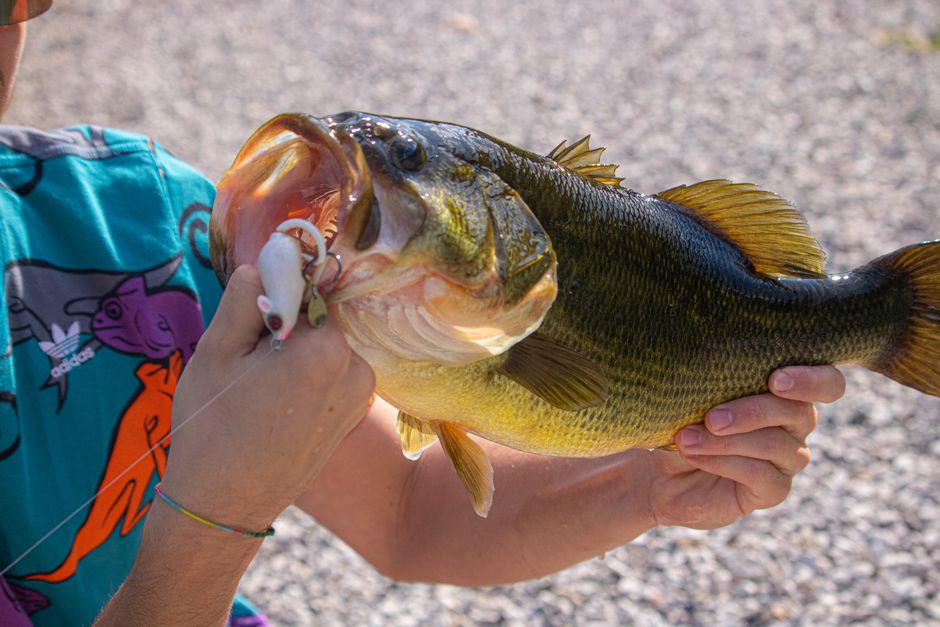
The morning mist still clung to the glassy surface of the lake, painting the world in muted tones of grey and green. A lone heron stood sentinel on a submerged log, mirroring the stillness. My cast landed softly near a patch of lily pads, the weightless plastic worm sinking slowly into the murky depths. Then, it happened. Not a gentle tug, but a violent, explosive strike that ripped the rod from my hands if I hadn't been ready. The water erupted in a shower of spray as a dark green torpedo launched itself skyward, gills flared, shaking its head in a desperate attempt to dislodge the hook. That, my friends, is the heart-pounding thrill of hooking into a Largemouth Bass.
Largemouth Bass are more than just a fish; they're an obsession for millions of anglers worldwide. Known for their aggressive strikes, acrobatic fights, and impressive size, these freshwater titans offer an exhilarating challenge for everyone from novice casters to seasoned pros. Found predominantly across the United States, with thriving populations also in parts of Mexico, Japan, and Southern Africa, the Largemouth is an accessible yet endlessly fascinating quarry. Whether you're chasing your first "bucketmouth" or a personal best, the pursuit of Largemouth Bass promises unforgettable moments on the water, often in stunning natural settings, from the sprawling reservoirs of Texas to the cypress-lined swamps of Florida, throughout the fishing seasons.
When to Go (Best Seasons and Times)
Understanding the Largemouth Bass's seasonal behavior is key to consistent success. These fish are highly influenced by water temperature, which dictates their activity levels, feeding patterns, and location.
- Spring (Pre-spawn & Spawn): This is arguably the most exciting time to target big bass. As water temperatures climb into the 50s and 60s Fahrenheit (10-20°C), bass move from deep wintering holes to shallower spawning flats.
- Pre-spawn: Bass are actively feeding, bulking up for the spawn. Look for them in staging areas near prime spawning grounds – points, humps, and secondary channels adjacent to shallow bays. Early spring mornings or late afternoons can be incredibly productive.
- Spawn: When water temperatures hit the mid-60s (18-20°C), bass move onto beds. They become highly territorial and protective. While challenging to catch, sight fishing for bedding bass can be thrilling. Be mindful of disturbing spawning fish and consider releasing them quickly.
- Summer (Post-spawn & Summer Patterns): Once the spawn is over, bass scatter, often moving to deeper, cooler water during the heat of the day.
- Early Summer: Bass are recovering from the spawn and feeding heavily. Topwater action can be incredible during low-light conditions (dawn and dusk) or on overcast days.
- Mid-Summer: As temperatures soar, bass seek shade and oxygen. Look for them in deeper offshore structures, under boat docks, submerged timber, or in areas with strong current or vegetation. Night fishing for bass can be incredibly effective in the summer.
- Fall (Feeding Frenzy): As water temperatures begin to drop and baitfish schools migrate, bass go on a major feeding binge, stocking up for winter.
- This is another prime time for trophy bass. Look for them ambushing baitfish near creek channels, points, and humps. Reaction baits like crankbaits and spinnerbaits shine. Overcast days with stable weather are often best.
- Winter (Slow & Deep): Bass become lethargic in cold water (below 50°F/10°C) and typically retreat to deep, stable water.
- They'll still eat, but presentations need to be slow and precise. Jigs, spoons, and slow-rolled swimbaits are effective. Focus on sunny days, as bass may move shallower to warm up for short periods.
Best Times of Day: Generally, dawn and dusk offer the best fishing, especially in warmer months, due to cooler temperatures and lower light. Overcast days can extend these prime windows.
Where to Fish (Top Locations)
The beauty of Largemouth Bass fishing in the US is its widespread availability. From small farm ponds to massive reservoirs, opportunities abound. Here are some of the most iconic and accessible locations:
- Lake Fork, Texas: A legendary big bass factory known for producing multiple ShareLunker entries annually. Its extensive submerged timber and hydrilla beds provide ideal habitat. Public boat ramps and fishing piers are available. Check with the Texas Parks and Wildlife Department for access details.
- Lake Okeechobee, Florida: The "Big O" is a vast, shallow lake famous for its abundant vegetation and monster bass. It's a fantastic fishery for both quantity and quality. Numerous public access points and boat ramps surround the lake. Consult the Florida Fish and Wildlife Conservation Commission for detailed access maps.
- Lake Guntersville, Alabama: This Tennessee River impoundment boasts expansive grass flats and submerged structure, making it a top destination for tournament anglers and trophy hunters. Multiple public boat launches and state parks offer access. Information is available through the Alabama Department of Conservation and Natural Resources.
- Clear Lake, California: California's largest natural freshwater lake, Clear Lake is renowned for its enormous bass and incredible numbers. Its diverse structure, from tules to rock piles, holds fish year-round. Public ramps and fishing access points are well-maintained. Contact the California Department of Fish and Wildlife for current information.
- Lake Lanier, Georgia: A deep, clear reservoir with excellent spotted bass and quality Largemouth. Its abundant standing timber and deep points are key features. Numerous state parks and public access areas are available. The Georgia Department of Natural Resources provides detailed boating and fishing guides.
International Opportunities: While the US is prime, don't overlook world-class Largemouth fishing in places like Lake El Salto, Mexico, famous for its incredible numbers of double-digit bass, or even Japan, where bass fishing culture is huge and trophy fish abound in many reservoirs. These destinations typically involve guided trips with specialized outfitters.
How to Fish (Proven Techniques)
Mastering a few fundamental techniques will set you up for success, and then you can layer on more advanced strategies.
For Beginners:
- Texas Rig:
- Setup: Thread a bullet weight onto your line, then tie on an offset worm hook. Thread a soft plastic worm or creature bait onto the hook, burying the hook point back into the plastic (weedless).
- Presentation: Cast near cover (lily pads, submerged logs, docks). Let it sink to the bottom. Slowly drag or hop the bait along the bottom with your rod tip, reeling in slack.
- The Bite: A "thump," a sudden weight, or your line moving sideways. Drop your rod tip, reel down any slack, and set the hook with a strong, upward sweep.
- Spinnerbaits:
- Setup: Tie a spinnerbait directly to your line. These lures have a weighted head, a skirt, and one or more spinning blades.
- Presentation: Cast near cover or open water. Immediately begin a steady retrieve. The blades will flash and vibrate, attracting bass. Experiment with retrieve speeds – slow-rolling near the bottom, or faster just under the surface.
- The Bite: Usually a solid strike, often felt as a strong pull. Keep reeling and lean into the fish.
- Shallow Crankbaits:
- Setup: Tie a crankbait directly to your line. Choose models that dive to 2-6 feet for shallow water.
- Presentation: Cast towards promising cover. Reel steadily, allowing the bait to dive and "crank" through the water. Occasionally pause or twitch the rod to impart erratic action.
- The Bite: A jarring strike. Keep pressure on the fish and reel it in.
Advanced Tips:
- Topwater Frogs: When bass are in heavy matted vegetation (lily pads, hydrilla), a weedless frog bait can be deadly. Cast onto the mat and twitch it slowly across the surface, pausing occasionally. Be patient with the strike – wait until you feel the fish before setting the hook.
- Jigging: Jigs (rubber-skirted, hair jigs) are versatile and imitate crawfish or baitfish. Flip or pitch them into heavy cover, let them sink, and subtly hop or drag them on the bottom. This is a finesse presentation for wary fish.
- Carolina Rig: Similar to a Texas Rig but with a sliding weight above a swivel, then a leader to the hook. This allows the bait to float freely above the weight, creating a natural presentation for suspended fish or when covering ground.
Who to Go With (Guides, Groups, or Solo)
The choice of whether to hire a guide, fish with friends, or go solo depends on your experience, budget, and goals.
- Guided Trips: For beginners or those exploring a new fishery, a professional fishing guide is invaluable. They provide the boat, gear, local knowledge, and expertise to put you on fish and teach you techniques.
- Cost: In the US, a full-day bass fishing guide can range from $400-$800, depending on the location, guide's reputation, and whether it's a full or half-day trip. This often includes tackle, bait, and sometimes lunch.
- Benefits: Steep learning curve, access to private or hard-to-reach spots, reduced planning stress.
- Fishing with Friends/Groups: A fantastic way to learn from peers, share costs, and enjoy camaraderie. It's often more affordable than a guide if you split boat fuel and other expenses. Just ensure everyone has a valid fishing license.
- Solo Fishing: Offers complete freedom and solitude. It's the most budget-friendly option if you already own gear. It also forces you to learn and adapt independently, which is excellent for developing skills. Best for anglers with some experience.
For international destinations like Mexico, a guided trip with a reputable outfitter is almost essential. These packages typically include lodging, meals, boats, and guides, often costing $1,500-$3,000+ for a 3-5 day trip, excluding airfare. Research outfitters known for ethical practices and good conservation records.
Essential Gear Recommendations
Having the right tools makes all the difference. Here’s a breakdown of must-have gear, with budget-friendly alternatives.
- Rod & Reel Combo:
- Must-Have: A medium-heavy power, fast-action 6'6" to 7'3" baitcasting or spinning combo. Baitcasting is preferred for heavier lures and cover, spinning for lighter presentations.
- Shimano SLX XT Baitcasting Combo → Shop on Amazon or Daiwa Tatula LT Spinning Combo → Shop on Amazon
- Budget-Friendly: A medium-heavy spinning combo is versatile and easier for beginners.
- Ugly Stik GX2 Spinning Combo → Shop on Amazon or Pflueger President Spinning Combo → Shop on Amazon
- Must-Have: A medium-heavy power, fast-action 6'6" to 7'3" baitcasting or spinning combo. Baitcasting is preferred for heavier lures and cover, spinning for lighter presentations.
- Fishing Line:
- Must-Have: 15-20 lb fluorocarbon or monofilament for baitcasting; 10-15 lb braided line with a fluorocarbon leader for spinning.
- Seaguar InvizX Fluorocarbon Line → Shop on Amazon
- Budget-Friendly: Good quality monofilament is a cost-effective option.
- Berkley Trilene XL Monofilament → Shop on Amazon
- Must-Have: 15-20 lb fluorocarbon or monofilament for baitcasting; 10-15 lb braided line with a fluorocarbon leader for spinning.
- Lures & Terminal Tackle:
- Must-Have:
- Soft Plastics: Plastic worms (7-10 inch), creature baits, senkos. (e.g., Zoom Trick Worm → Shop on Amazon)
- Hooks: 3/0-5/0 offset worm hooks, EWG hooks.
- Weights: Bullet weights (1/8 oz to 1/2 oz).
- Spinnerbaits: 3/8 oz to 1/2 oz in white, chartreuse, or natural colors. (e.g., Strike King Spinnerbait → Shop on Amazon)
- Crankbaits: Shallow diving (2-6 ft) in shad or crawfish patterns. (e.g., Rapala Shad Rap → Shop on Amazon)
- Topwater: Frogs, poppers. (e.g., Booyah Pad Crasher Frog → Shop on Amazon)
- Budget-Friendly: Start with a few packs of soft plastics, a handful of hooks and weights, and one or two spinnerbaits.
- Must-Have:
- Tools:
- Must-Have: Pliers (for hook removal), line cutters, small measuring board/tape, digital scale.
- Budget-Friendly: Basic fishing pliers and a pocket knife will suffice.
- Safety & Comfort:
- Must-Have: Polarized sunglasses (critical for spotting fish and structure), wide-brimmed hat, sunscreen, insect repellent, rain gear, personal flotation device (PFD).
- Budget-Friendly: Any sunglasses, a baseball cap, and a basic PFD.
Expected Costs (Full Setup vs. Budget Version)
Getting into Largemouth Bass fishing can be as affordable or as elaborate as you choose. Here’s a realistic breakdown in USD:
- License/Permit:
- Annual Resident Fishing License (US): $20-$50 (Varies by state. E.g., Florida is ~$17, Texas is ~$30). Always check with the relevant state fish and wildlife agency for current fees.
- Non-Resident Annual License (US): $40-$100+
- Short-term (1-7 day) licenses are often available for visitors.
- Full Setup (High-Quality Gear):
- High-End Rod & Reel Combo (Baitcasting or Spinning): $300 - $600+
- Premium Fishing Line (Fluorocarbon/Braid): $30 - $50
- Diverse Lure Selection (Soft Plastics, Cranks, Jigs, Topwater, Spinnerbaits): $150 - $300
- Tools (Pliers, Scale, Measuring Board): $50 - $100
- Total (excluding license): $530 - $1050+
- Budget-Friendly Version (Getting Started):
- Beginner Rod & Reel Combo (Spinning): $60 - $120
- Good Quality Monofilament Line: $10 - $20
- Essential Lures (2-3 packs soft plastics, hooks/weights, 1 spinnerbait, 1 crankbait): $40 - $80
- Basic Tools (Pliers, Knife): $20 - $40
- Total (excluding license): $130 - $260
Remember, these are initial setup costs. Ongoing expenses include replacement lures, line, fuel for your boat (if applicable), and potential boat maintenance. Always advise readers to check current license fees and regulations with their specific state's fish and wildlife agency before heading out.
Regulations and Conservation
Adhering to fishing regulations is not just about avoiding fines; it's about ensuring healthy fish populations for future generations. Largemouth Bass are generally well-managed across the United States.
-
Key Regulations:
- Fishing License: Always carry a valid fishing license for the state you are fishing in.
- Bag Limits: Most states have daily bag limits (e.g., 5 bass per day) to prevent overfishing.
- Size Limits: Minimum or slot limits are common. A "slot limit" means you can keep fish below a certain size and above another (e.g., no fish between 14-18 inches), protecting prime breeding-size fish.
- Season: While Largemouth Bass are often open year-round, some states may have specific seasonal closures or restrictions, particularly during spawning periods.
- Gear Restrictions: Certain types of bait or tackle may be prohibited in specific waters.
-
Conservation:
- Catch and Release: Many Largemouth Bass anglers practice catch and release, especially for larger, older fish that are valuable breeders. If you plan to release fish, handle them gently, minimize their time out of water, and use proper tools like lip grippers to avoid damage.
- Barbless Hooks: Consider using barbless hooks or crimping down barbs on your hooks to make releases easier and less harmful to the fish.
- Water Quality: Support efforts to maintain clean water and healthy aquatic habitats. Bass thrive in diverse ecosystems with good water quality and ample cover.
Always check the current regulations with the relevant state fish and wildlife agency (e.g., Florida Fish and Wildlife Conservation Commission, Texas Parks and Wildlife Department, California Department of Fish and Wildlife, etc.) before each trip, as they can change annually.
Pro Tips and Common Mistakes to Avoid
Even with the right gear and knowledge, a few pro tips can elevate your game, and avoiding common blunders will save you frustration.
Pro Tips:
- Fish the "Edges": Bass love transition zones. Target the edges of weed lines, where shallow water meets deep, where current meets slack water, or the shaded side of docks and logs.
- Match the Hatch (or the Forage): Observe what bass are feeding on. If you see shad jumping, throw a shad-colored crankbait. If crawfish are present, a brown or black jig is a good bet.
- Vary Your Retrieve: Don't just reel steadily. Experiment with pauses, twitches, fast bursts, and slow rolls. An erratic action often triggers a strike from a hesitant bass.
- Silence is Golden: Bass have excellent hearing. Avoid loud noises in your boat, especially in shallow water. Stealthy approaches pay off.
- Sharpen Your Hooks: A dull hook will cost you fish. Always check your hook points and sharpen them with a hook file if needed. A sharp hook means more solid hooksets.
- Use Scent: Applying a fish attractant scent to your soft plastics can entice wary bass to hold onto your bait longer, giving you more time to set the hook.
- Polarized Sunglasses: These are not just for comfort; they cut glare and allow you to see submerged structure, weed lines, and even cruising bass, giving you a huge advantage.
Common Mistakes to Avoid:
- Not Checking Your Drag: Too tight, and your line will snap on a big fish. Too loose, and you won't get a good hookset. Set your drag before you start fishing.
- Using Too Heavy/Light Line: Heavy line can reduce casting distance and spook fish in clear water. Too light, and you risk break-offs in heavy cover. Match line size to conditions and cover.
- Poor Knot Tying: A weak knot is the weakest link in your setup. Practice reliable knots like the Palomar or improved clinch knot until they're second nature.
- Fishing One Spot Too Long: If you're not getting bites after 15-20 minutes, move on. Bass are often in specific areas, and if they're not there, they're somewhere else.
- Ignoring the Weather: Bass behavior changes dramatically with weather fronts, temperature swings, and cloud cover. Pay attention to forecasts and adjust your tactics.
- Rushing the Hookset: Especially with soft plastics, wait until you feel the weight of the fish or see your line moving consistently before setting the hook. A premature hookset will often pull the bait away from the fish.
Conclusion
The thrill of Largemouth Bass fishing is truly unparalleled. From the explosive topwater strike at dawn to the subtle thump of a jig in deep water, every moment on the water chasing these magnificent fish is an adventure. Whether you're a seasoned angler or just starting your journey, the Largemouth offers accessible, exciting, and rewarding opportunities across the diverse landscapes of the United States and beyond. It’s a pursuit that sharpens your skills, connects you with nature, and creates memories that last a lifetime.
So, gear up, study your local waters, and get out there. The next trophy Largemouth is waiting for you! Tight lines, and may your next cast be your best one yet.
Stay tuned for our next post, where we’ll dive into the world of saltwater fishing for the powerful Redfish!
As an Amazon Associate I earn from qualifying purchases at no extra cost to you. Links above are affiliate search links — prices may vary. Generated 2026-06-24